.png)


Improve Email Marketing 2025: Strategies That Work

TL;DR:
- Effective email marketing in 2025 relies on proper setup, including domain authentication and platform selection, to enhance deliverability and personalization. Leveraging AI-driven segmentation, disciplined list hygiene, and automated flows significantly boosts engagement and revenue, while operational practices prevent reputation damage. Small, consistent optimizations in testing, timing, and list management sustain long-term growth and maximize return on investment.
Email marketing delivers $36–$42 ROI per dollar spent in 2025, making it the highest-returning channel in most e-commerce stacks. To improve email marketing 2025 performance, you need more than better subject lines. The brands pulling ahead are combining AI personalization, disciplined list hygiene, and automated flows built on platforms like Klaviyo, Mailchimp, and HubSpot. This guide covers the exact tactics that move the needle, from authentication setup to segmentation strategy, without the fluff.
What do you need to improve email marketing in 2025?
The foundation comes before the tactics. Brands that skip setup and jump straight to creative end up troubleshooting deliverability problems that kill every campaign they send.
Choose a platform built for personalization
Your email platform determines what is possible. Klaviyo leads for e-commerce because it pulls real-time purchase and browse data directly into segmentation logic. Mailchimp works well for brands at earlier stages that need a simpler interface. HubSpot suits teams that want email tightly connected to CRM and sales pipelines. The right choice depends on your data infrastructure, not just your send volume.
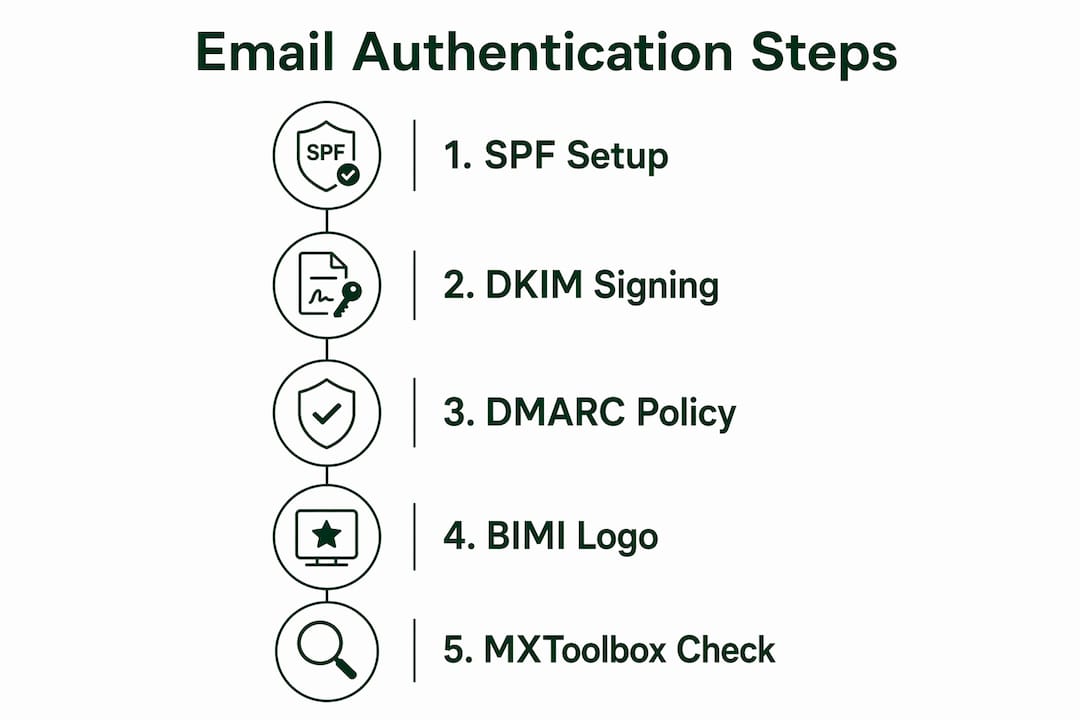
Authenticate your domain before anything else
SPF, DKIM, DMARC, and BIMI are not optional configurations. They are the technical signals that inbox providers like Gmail and Yahoo use to decide whether your email lands in the inbox or the spam folder. BIMI adds your brand logo to authenticated emails, which increases visual trust at the inbox level. Set these up before you send a single campaign to a new domain or IP.
Pro Tip: Run your domain through MXToolbox before launching any new campaign. It surfaces authentication gaps in under two minutes.
Platform comparison: key features at a glance
| Platform | AI Personalization | Automation Flows | Native E-Commerce Data | Best For |
|---|---|---|---|---|
| Klaviyo | Advanced | Yes | Yes (Shopify, BigCommerce) | DTC e-commerce brands |
| Mailchimp | Moderate | Yes | Limited | SMBs and early-stage brands |
| HubSpot | Moderate | Yes | Via CRM integration | B2B and mid-market teams |
| Drip | Advanced | Yes | Yes | E-commerce with complex flows |
Clean, verified subscriber lists complete the foundation. A list full of invalid addresses inflates your bounce rate and signals poor sender behavior to inbox providers. Use tools like ZeroBounce or NeverBounce to verify new imports before they ever touch your sending domain.
How does AI segmentation improve email personalization?
AI-driven personalization increases click-through rates by up to 41% through real-time granular segmentation. That number reflects a structural shift in how email performs when content matches the individual rather than the average subscriber.
The practical starting point is not building 40 micro-segments. Over-segmentation into 47 micro-segments creates systems no team can manage consistently. Start with 4–5 core segments aligned to your business goals. Engagement tier is the most useful first cut: active buyers, recent browsers, lapsed customers, and never-purchased subscribers each need fundamentally different messaging.
From there, layer behavioral signals:
- Purchase history: Recommend complementary products based on what someone already bought.
- Browse behavior: Trigger flows when a subscriber views a product category multiple times without converting.
- Email engagement: Separate high-openers from low-openers and adjust send frequency accordingly.
- Lifecycle stage: New subscribers need orientation. Loyal customers need exclusivity signals, not introductory offers.
AI tools inside Klaviyo and platforms like Salesforce Marketing Cloud analyze these signals in real time and update segment membership automatically. You set the rules once and the system keeps segments current without manual list pulls.
Pro Tip: Personalization does not require perfect data. Start with purchase history and engagement tier. Those two signals alone will outperform a single broadcast list every time.
The email marketing trends 2025 data reinforces this: welcome series are shifting away from aggressive discount sequences toward emotional orientation that builds belonging. Subscribers who feel recognized in the first three emails show measurably higher 90-day retention rates.
What operational practices protect deliverability in 2025?
Deliverability is the single most overlooked lever in email marketing. Brands spend weeks on creative and ignore the metrics that determine whether any of it reaches the inbox.
The non-negotiable thresholds are clear. Hard bounce rates must stay below 2%, and spam complaint rates must stay below 0.1%. Complaint rates above 0.3% trigger reputation damage with Gmail and Outlook that can take months to reverse. These are not guidelines. They are the operating limits of a healthy sending program.
Here is the operational checklist that keeps programs inside those limits:
- Run a 120-day sunset policy. Suppress any subscriber who has not opened or clicked in 120 days. Sending to disengaged addresses is the fastest way to accumulate spam complaints and hurt your sender score.
- Monitor bounce categories separately. Hard bounces mean the address does not exist. Soft bounces mean a temporary delivery failure. Treat them differently. Hard bounces should be removed immediately.
- Warm up new domains and IPs gradually. Start with small sends to engaged lists over a 4–6 week period. Cold blasting a new domain destroys sender reputation before you have built any trust with inbox providers.
- Make unsubscribing easy. A one-click unsubscribe reduces spam complaints. Subscribers who cannot find the unsubscribe link hit the spam button instead.
- Segment by engagement before increasing frequency. Highly engaged segments can receive more frequent sends. Low-engagement segments need re-engagement flows, not more promotional emails.
Fixing deliverability by removing inactive subscribers often produces higher revenue lifts than any creative refresh or ad spend increase. The math is simple: a smaller, engaged list outperforms a large, disengaged one every time.
How do you optimize send timing, design, and testing?
Execution is where strategy becomes revenue. The best email strategies for 2025 treat timing, design, and testing as a continuous cycle, not a one-time setup.
Send timing and frequency
Audience behavior data inside your platform tells you when your specific subscribers open emails. Tuesday through Thursday mornings perform well across most B2C categories, but your list may behave differently. Pull your own open-time data before defaulting to industry averages.
Design for mobile-first scrolling
Current email design trends favor soft, modular layouts and vertical hero images built for mobile scrolling. More than 60% of email opens happen on mobile devices. A design that looks polished on desktop but breaks on a 375px screen loses the majority of your audience before they read a single word.
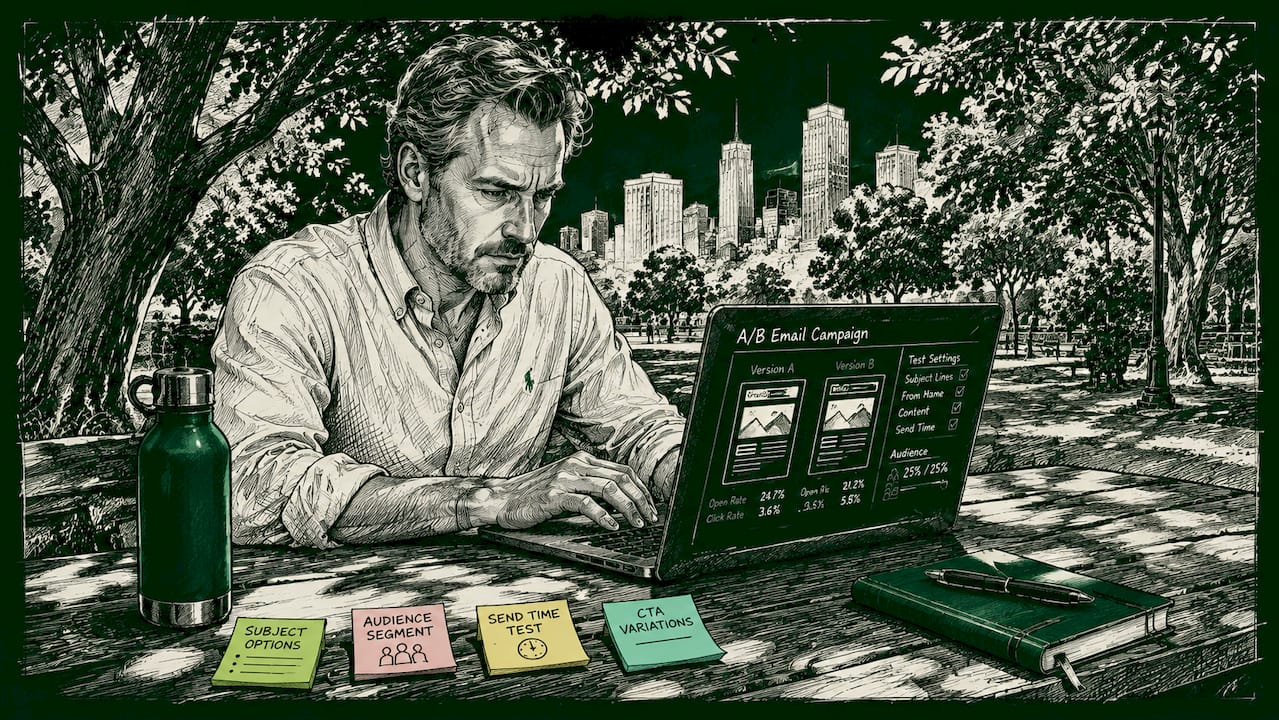
A/b testing that actually compounds
A/B testing subject lines, send times, and message content systematically improves metrics when you test one variable at a time with a statistically significant sample. Testing two variables simultaneously makes it impossible to know which change drove the result. A disciplined testing program compounds over time. Each winning variation becomes the new baseline, and the next test builds on that.
| Optimization Tactic | Variable to Test | Expected Impact |
|---|---|---|
| Subject line testing | Curiosity vs. direct benefit | Open rate lift of 5–15% |
| Send time optimization | Morning vs. evening sends | Open rate lift of 3–10% |
| CTA button copy | Action verb vs. benefit phrase | CTR lift of 8–20% |
| Welcome series length | 3-email vs. 5-email sequence | 30-day conversion rate lift |
| Re-engagement flow trigger | 60-day vs. 90-day inactivity | List health improvement |
Automation flows like welcome series, post-purchase sequences, and browse abandonment are the highest-ROI programs in any e-commerce email stack. Build these before you focus on broadcast campaigns. They run continuously and generate revenue without additional send effort. For a deeper look at retention-focused flows, the architecture matters as much as the copy.
What mistakes undermine email campaign improvement?
Most email programs plateau not because of bad creative but because of operational errors that compound quietly over time.
The most common traps include:
- Misreading metrics due to attribution errors. Top-performing email programs use unified cross-channel attribution to prevent misallocation. If SMS and email both touch a customer before a purchase, crediting only email inflates its apparent ROI and leads to bad budget decisions.
- Over-segmentation without a management plan. Building dozens of segments without the team capacity to maintain them creates stale logic and inconsistent messaging.
- Ignoring list hygiene until deliverability drops. By the time open rates fall noticeably, sender reputation damage is already done. List hygiene is a weekly practice, not a quarterly cleanup.
- Sending too frequently to disengaged subscribers. Frequency without engagement signals is spam. Reduce cadence for low-engagement segments before increasing it for anyone.
Pro Tip: Set one clear goal per campaign before you build it. Campaigns without a defined success metric get optimized for the wrong thing, usually open rate, when the real goal is revenue per send.
For a full breakdown of advanced segmentation strategies that avoid these traps, the architecture of your segments matters as much as the data feeding them.
Key takeaways
The most effective way to improve email marketing in 2025 is to fix deliverability and segmentation first, then layer in AI personalization and disciplined testing to compound gains over time.
| Point | Details |
|---|---|
| Fix deliverability first | Keep hard bounces below 2% and spam complaints below 0.1% before scaling sends. |
| Start with 4–5 segments | Engagement tier and purchase history outperform complex micro-segmentation every time. |
| AI personalization lifts CTR | Real-time segmentation via AI tools increases click-through rates by up to 41%. |
| Test one variable at a time | Isolating variables in A/B tests produces reliable data that compounds into higher revenue per send. |
| Automate high-ROI flows first | Welcome series, post-purchase, and browse abandonment flows generate continuous revenue without added effort. |
What i’ve learned about sustainable email growth
Most brands I work with arrive with the same problem. They have a large list, inconsistent results, and a belief that the next creative refresh will fix everything. It rarely does.
The programs that grow sustainably share one trait: they treat list health as a revenue asset, not a maintenance chore. Removing 30% of a list feels counterintuitive when you are used to measuring success by subscriber count. But the brands that do it consistently see open rates climb, spam complaints drop, and revenue per send increase within 60 days.
AI tools have genuinely changed what is possible with personalization. Platforms like Klaviyo now do in real time what used to require a data analyst and a week of work. That frees your team to focus on strategy and creative rather than manual list management. The risk is over-relying on automation and losing the human judgment that makes messaging feel relevant rather than algorithmic.
The other thing I would push back on: most teams underinvest in measurement. Cross-channel attribution is not a nice-to-have. If you cannot separate email’s contribution from SMS and paid retargeting, you are making budget decisions on incomplete data. That compounds into misallocated spend over a full year.
Small, consistent optimizations beat large, infrequent overhauls. Run one clean A/B test per send cycle. Review your sunset policy quarterly. Check your email ROI tactics against actual revenue data, not just open rates. That discipline, applied consistently, is what separates programs that plateau from programs that compound.
— Melanie
How Theemailmarketers helps e-commerce brands scale email revenue
Theemailmarketers builds retention-focused email programs for 8-figure DTC brands, VC-backed companies, and growth-stage retailers that need more than a template and a send button. The team handles AI-driven segmentation, deliverability audits, automated flow architecture, and campaign execution, all tied to measurable revenue outcomes. If your current program is underperforming or you are starting from scratch, the general case study shows exactly how these strategies perform in real e-commerce environments. For brands ready to build a full retention system, the Retention Lab is the structured program that gets you there.
FAQ
What is the average ROI for email marketing in 2025?
Email marketing delivers $36–$42 per dollar spent in 2025, making it the highest-ROI digital channel available to e-commerce brands.
How many segments should i start with?
Start with 4–5 core segments based on engagement tier and purchase behavior. Adding complexity before those segments are proven creates unmanageable systems that degrade over time.
What bounce rate is acceptable for email deliverability?
Hard bounce rates must stay below 2% and spam complaint rates below 0.1%. Rates above 0.3% for complaints cause lasting damage to sender reputation with major inbox providers.
How does AI improve email personalization?
AI tools analyze real-time customer data to update segment membership and trigger personalized content automatically, increasing click-through rates by up to 41% compared to static broadcast campaigns.
How often should i clean my email list?
Run list hygiene checks at least monthly and apply a 120-day sunset policy to suppress subscribers who have not engaged within that window. Waiting for open rates to drop before cleaning is too late.


