.png)


How to Build Email List for E-commerce Growth

Over 70 percent of visitors leave most American websites without sharing any contact details at all. The challenge of building a quality email list can hold back even the most determined marketers in the United States. Crafting a strategy that truly connects with your target audience will help turn website traffic into loyal subscribers, and this guide reveals practical steps to define goals, capture attention, and grow your email list with measurable success.
Table of Contents
- Step 1: Define Your Audience And List Goals
- Step 2: Set Up High-Converting Capture Methods
- Step 3: Create Irresistible Lead Magnets
- Step 4: Integrate Data Capture Tools With Your Platforms
- Step 5: Verify And Optimize Your Email List For Engagement
Quick Summary
| Key Point | Explanation |
|---|---|
| 1. Define Your Audience | Create detailed buyer personas that capture demographics, interests, and behaviors for more targeted email content. |
| 2. Implement Effective Capture Methods | Use strategic methods like scroll-triggered forms to convert website visitors into email subscribers effectively. |
| 3. Design Compelling Lead Magnets | Offer valuable incentives that address your audience’s pain points to encourage them to share their email addresses. |
| 4. Integrate with Data Capture Tools | Use automation technologies to streamline data collection and enhance engagement tracking across platforms. |
| 5. Maintain an Engaged Email List | Regularly audit and optimize your email list to ensure it contains active subscribers for better campaign performance. |
Step 1: Define your audience and list goals
Building a powerful email list starts with knowing exactly who you want to reach and what you aim to achieve. Think of this step as creating a strategic roadmap for your email marketing journey.
To define your audience, start by developing detailed buyer personas that go beyond basic demographics. You want to understand not just age and location, but their interests, pain points, online behaviors, and purchasing motivations. Segment your potential subscribers into specific groups based on characteristics like industry, job role, past purchasing history, or engagement level. This granular approach allows you to craft highly targeted email content that resonates deeply.
When setting list goals, align them directly with your broader business objectives. Are you looking to increase brand awareness, generate more leads, drive sales, or educate your audience? Each goal will shape how you build and nurture your email list. For instance, if your primary aim is lead generation, you might focus on creating compelling lead magnets that attract your ideal subscribers. Specific, measurable goals will help you track the effectiveness of your email list building efforts and adjust strategies accordingly.
Pro tip: Create a detailed spreadsheet that maps out your audience segments, their unique characteristics, and corresponding email list goals. This living document will serve as your strategic reference point and help you stay focused.
With your audience defined and goals established, you are now ready to move on to the next critical step of choosing the right list building strategies that will attract your ideal subscribers.
Step 2: Set up high-converting capture methods
Now that you understand your audience and goals, it is time to create email capture methods that transform website visitors into potential subscribers. The key is implementing strategic approaches that feel natural and provide genuine value to your potential subscribers.
Start by designing scroll-triggered forms that appear at optimal moments during user engagement. Research shows these forms can increase conversion rates by up to 30% when strategically positioned around 50% of the page height. This timing matters because it corresponds with increased user intent and engagement. Consider creating exit-intent popups, slide-in forms, or modals that appear after users have consumed some content and are more likely to be interested in additional resources.

Understand the critical stakes of email capture. Without effective capture mechanisms, 98% of your website visitors will leave without providing contact information, eliminating future re-engagement opportunities. Your capture methods should offer clear value propositions like exclusive discounts, free guides, or access to special content that motivates visitors to share their email addresses. Make your forms simple, requesting minimal information typically just a first name and email address to reduce friction and increase conversion potential.
Pro tip: A/B test different capture methods and designs to discover what resonates most with your specific audience. Track metrics like conversion rate, bounce rate, and time on page to continuously optimize your approach.
With your high-converting capture methods in place, you are now prepared to attract and retain potential subscribers who are genuinely interested in your brand and offerings.
Step 3: Create irresistible lead magnets
Lead magnets are the secret weapon for transforming casual website visitors into engaged email subscribers. Your goal is to craft an offer so compelling that potential subscribers can’t resist providing their email address in exchange for valuable content or incentives.
Start by designing high-converting email capture offers that combine attractive visuals with persuasive copywriting. Consider creating unique incentives like exclusive discounts, free digital guides, or special product samples that directly address your audience’s specific pain points. The most effective lead magnets solve an immediate problem or provide tangible value within seconds of downloading or accessing the resource. For an e-commerce brand, this might mean offering a 15% first purchase discount, a comprehensive sizing guide, or a free expert ebook that relates directly to your product category.
Unique promotional strategies can dramatically increase your email capture success. Think beyond standard discounts by creating time-sensitive offers like cash back on first orders, exclusive early access to new product lines, or limited edition resources that create a sense of urgency. Your lead magnet should feel like an exclusive opportunity rather than a generic marketing tactic. Make sure the perceived value of your offer far exceeds the simple act of providing an email address.
Pro tip: Always align your lead magnet directly with your target audience’s interests and your brand’s core offerings. A misaligned lead magnet might generate emails but won’t attract genuinely interested potential customers.
With a compelling lead magnet in place, you are now ready to attract high quality email subscribers who are genuinely interested in what your brand has to offer.
Step 4: Integrate data capture tools with your platforms
Successfully building your email list requires seamless integration of data capture tools across your digital platforms. Your goal is to create a unified system that effortlessly collects and manages subscriber information while providing a smooth user experience.
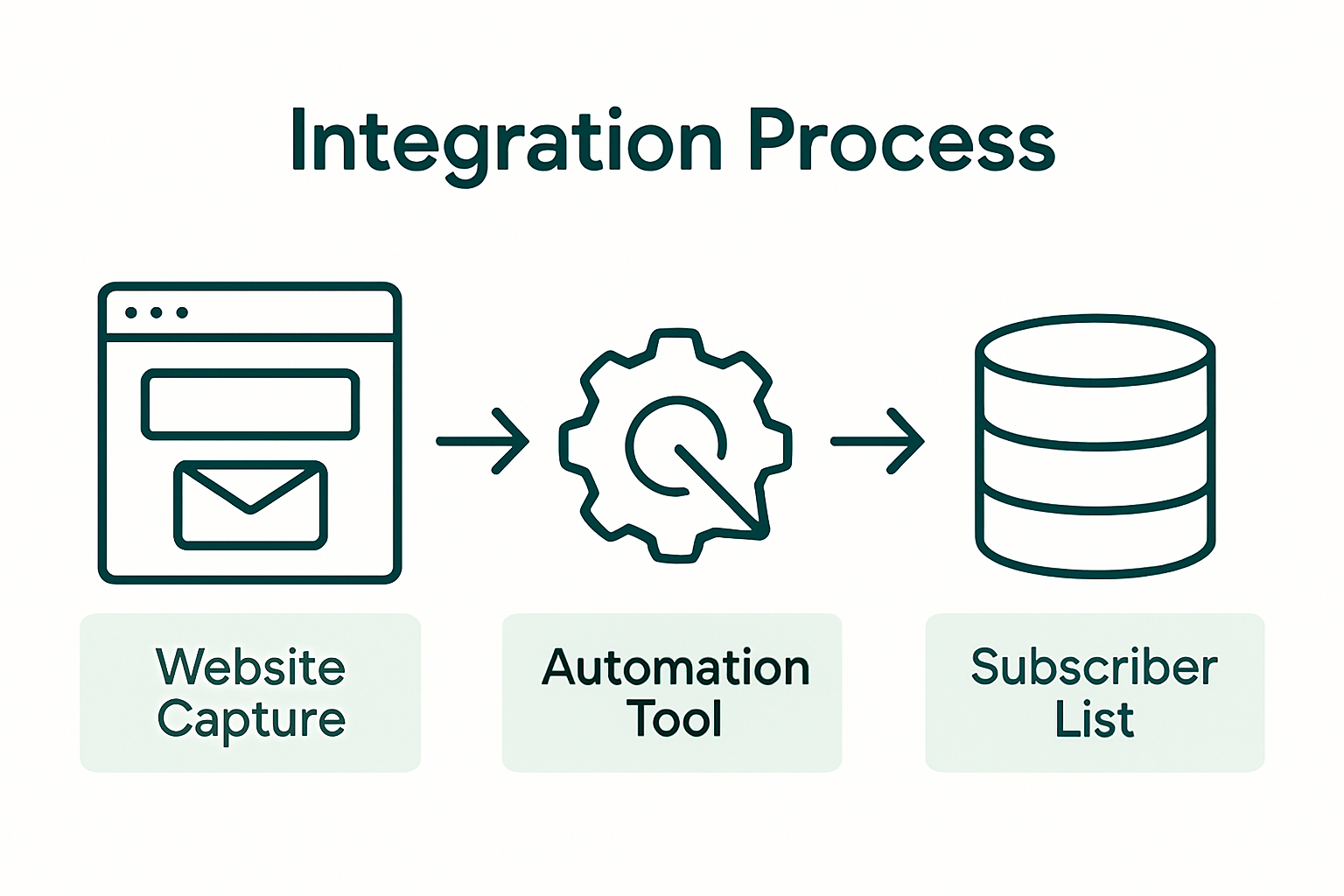
Implement marketing automation technologies that can replace manual and repetitive tasks with intelligent, streamlined processes. These tools help you execute sophisticated data collection strategies by automatically tracking user interactions, managing subscriber information, and personalizing communication workflows. Look for platforms that offer robust integration capabilities with your existing website, customer relationship management systems, and e-commerce platforms.
Advanced technological integrations like artificial intelligence and machine learning can dramatically enhance your data capture capabilities. These intelligent systems can read customer actions in real-time, adapting campaign content and timing to maximize engagement. Choose tools that provide comprehensive tracking features enabling you to understand subscriber behaviors, segment your audience effectively, and create highly targeted email campaigns.
Pro tip: Always prioritize data privacy and ensure your integration methods comply with current privacy regulations. Transparent data collection practices build trust with your potential subscribers.
With your data capture tools strategically integrated, you are now prepared to transform raw visitor information into meaningful marketing opportunities.
Step 5: Verify and optimize your email list for engagement
A healthy email list is the foundation of successful email marketing. Your mission now is to transform your raw subscriber data into a precision instrument for driving customer engagement and business growth.
Maintaining a clean and updated email list requires consistent analysis of engagement metrics and strategic subscriber management. Regularly audit your list by removing inactive subscribers, verifying email addresses, and creating segments based on user behavior and interaction patterns. This process helps improve email deliverability, protect your sender reputation, and ensure your messages reach genuinely interested recipients. Implement automated tools that can identify and remove invalid or bounced email addresses, reducing the risk of being flagged as spam.
Measuring and optimizing email campaign performance is crucial for capturing attention in crowded inboxes. Track key metrics like open rates, click through rates, and conversion rates to understand how your audience responds to different content types. Use these insights to segment your list more effectively, personalize your messaging, and create targeted campaigns that speak directly to specific subscriber groups.
Pro tip: Set up a re engagement campaign for subscribers who have not interacted with your emails in the past 3 to 6 months. This gives them a chance to confirm their interest or naturally filter themselves out of your list.
With a refined and optimized email list, you are now prepared to deliver highly targeted, compelling content that drives meaningful customer interactions.
Unlock the True Potential of Your E-commerce Email List
Building a targeted and engaged email list is critical for e-commerce growth but it comes with real challenges like crafting irresistible lead magnets, setting up seamless data capture, and maintaining list health. If you struggle with transforming raw subscriber data into high-impact campaigns that truly resonate with your audience The Email Marketers offer an expert solution. We specialize in implementing strategic segmentation strategies and automated email flows that maximize customer lifetime value while driving repeat purchases and community building for luxury and subscription brands.
Don’t let ineffective list building efforts hold your brand back Discover how our AI-driven email and SMS retention marketing can amplify your results with personalized messaging and lifecycle optimization. Ready to turn your email list into a powerful growth engine Visit The Email Marketers now and partner with a team that delivers data-driven, conversion-focused campaigns that your customers will respond to. Boost your e-commerce success today by exploring our services at The Email Marketers and start building a lasting connection with your customers.
Frequently Asked Questions
How can I define my target audience for building an email list in e-commerce?
To define your target audience, create detailed buyer personas that go beyond basic demographics. Identify their interests, pain points, and purchasing motivations to effectively tailor your email marketing strategies.
What are effective methods for capturing email addresses from website visitors?
Implement high-converting capture methods like scroll-triggered forms or exit-intent popups that provide value in exchange for email addresses. Strategically position these forms at engaging moments on your website to maximize conversion rates, aiming for an increase of 30% or more.
What types of lead magnets should I create to attract email subscribers?
Create lead magnets that offer immediate value, such as exclusive discounts or free guides relevant to your audience’s needs. Ensure that your offer addresses their specific pain points to enhance its attractiveness and compel sign-ups effectively.
How do I maintain and optimize my email list for better engagement?
Regularly clean your email list by removing inactive subscribers and verifying email addresses to improve deliverability. Aim to audit your list at least every three months to filter out subscribers who are not engaging with your emails.
How can I measure the effectiveness of my email marketing strategies?
Track key engagement metrics like open rates, click-through rates, and conversion rates to understand your email campaign’s performance. Use these insights to continuously refine your messaging and segmentation efforts for more targeted outreach.


