.png)


Email marketing: boost retention and sales with automation

TL;DR:
- Email marketing consistently generates the highest ROI for e-commerce by fostering direct, permission-based customer relationships. Strategic automation and personalization enhance retention, driving repeat purchases and long-term revenue growth. Building a lifecycle-focused email architecture yields more predictable results than volume-based campaign strategies.
Despite the explosion of social media, paid ads, and influencer channels, email marketing ROI consistently outperforms every other digital marketing channel for e-commerce brands. Yet many brand managers still treat email as an afterthought, a channel for blasting promotions and hoping for clicks. That’s a massive missed opportunity. This guide breaks down exactly how strategic email marketing, powered by automation and personalization, drives customer retention, increases repeat purchases, and builds the kind of long-term customer relationships that actually grow revenue.
Table of Contents
- The strategic foundation: Why email remains essential for e-commerce
- Automation and personalization: Driving conversions and repeat purchases
- ROI and retention: Proving value with numbers
- Getting started: Keys to building an effective email strategy
- A hard-won truth: Retention demands more than just ‘sending more emails’
- Take the next step with proven email marketing expertise
- Frequently asked questions
Key Takeaways
| Point | Details |
|---|---|
| Email fuels retention | Opt-in, lifecycle-driven email programs keep customers engaged and coming back. |
| Automation boosts ROI | Automated, behavior-based flows drive more conversions and free up resources. |
| Personalization increases impact | Dynamic and tailored content consistently outperforms generic campaigns. |
| Retention is the true KPI | Brands that prioritize retention over volume see stronger long-term growth. |
| Strategy beats volume | Targeted, benchmarked campaigns outperform those that just send more emails. |
The strategic foundation: Why email remains essential for e-commerce
Email is not just another channel. It’s the only major digital marketing channel where you own the relationship. You’re not renting reach from an algorithm. When someone opts into your list, they’re giving you direct, permission-based access to their inbox. That trust is a business asset most brands undervalue.
Customer retention strategies built on email work because the channel supports every stage of the customer lifecycle. Think about how email serves your brand at each stage:
- Acquisition: Welcome sequences introduce new subscribers to your brand story, values, and best products.
- Engagement: Educational content, curated picks, and loyalty rewards keep customers connected between purchases.
- Repeat purchase: Post-purchase flows and product recommendations drive the second and third buy, which is where real customer lifetime value starts.
- Re-engagement: Win-back campaigns recover customers who’ve gone quiet before they churn completely.
The reason why email marketing is necessary for retailers comes down to one core truth: opt-in lists are inherently more relevant than paid audiences. When someone subscribes, they’ve already signaled interest. That signal translates directly into higher open rates, stronger click-through rates, and better purchase conversion compared to cold ad traffic.
“Email supports the customer lifecycle from first purchase to loyal advocate, and opt-in relationships build trust that no paid channel can replicate.”
The numbers confirm this. DMA’s 2026 research benchmarks email ROI at around £41 for every £1 spent in the e-commerce sector, making it the most cost-effective marketing investment available to growth-focused brands. That figure isn’t a fluke. It reflects the compounding value of a well-maintained subscriber list, strong newsletter best practices, and lifecycle-oriented messaging that meets customers where they are.
The strategic foundation isn’t just about sending emails. It’s about treating your email program as a relationship engine. Brands that do this consistently outperform competitors who rely primarily on paid acquisition. Every dollar spent on email builds an asset. Every dollar spent on paid ads disappears the moment you stop spending.
Automation and personalization: Driving conversions and repeat purchases
Automation is where email marketing transforms from a manual chore into a scalable revenue machine. Instead of manually sending campaigns and hoping for the best, automation lets you deliver the right message at precisely the right moment based on what a customer actually did or didn’t do.
Here’s how a well-structured automation program works in practice:
- Welcome flow: The moment a customer subscribes, a welcome sequence introduces your brand, sets expectations, and offers a first-purchase incentive. This sequence typically runs over 3 to 5 days and can generate 3x the revenue per email compared to standard broadcast campaigns.
- Browse abandonment: When a visitor views a product page but doesn’t add to cart, a timely email featuring that exact product, along with social proof and scarcity cues, brings them back.
- Cart abandonment: Cart abandonment emails are some of the highest-converting automated flows in e-commerce, recovering revenue that would otherwise be permanently lost.
- Post-purchase flow: After the first purchase, the goal is to educate, delight, and encourage the second purchase. This is where loyalty program introductions, product education, and cross-sell recommendations drive lifetime value.
- Re-engagement flow: For subscribers who haven’t opened or purchased in 90 to 180 days, a targeted win-back sequence can recover a meaningful percentage before they churn.
Automation delivers messages based on real-time behaviors, which means every triggered email is contextualized to where the customer is in their journey. That context is what separates an email that feels helpful from one that feels spammy.
Personalization takes automation further. Dynamic content blocks swap out product images, copy, and offers based on a subscriber’s purchase history, browsing behavior, loyalty tier, or geographic location. The results are measurable. Personalization at scale doubled member credit redemptions for jewelry brand Ana Luisa, a direct result of swapping generic content for dynamically populated, behavior-driven messaging.
The role of AI in automation is growing rapidly. AI tools now predict optimal send times for individual subscribers, forecast which products a customer is most likely to buy next, and flag subscribers at churn risk before they go inactive. For brands managing large lists, AI-driven personalization at this level would be impossible manually.
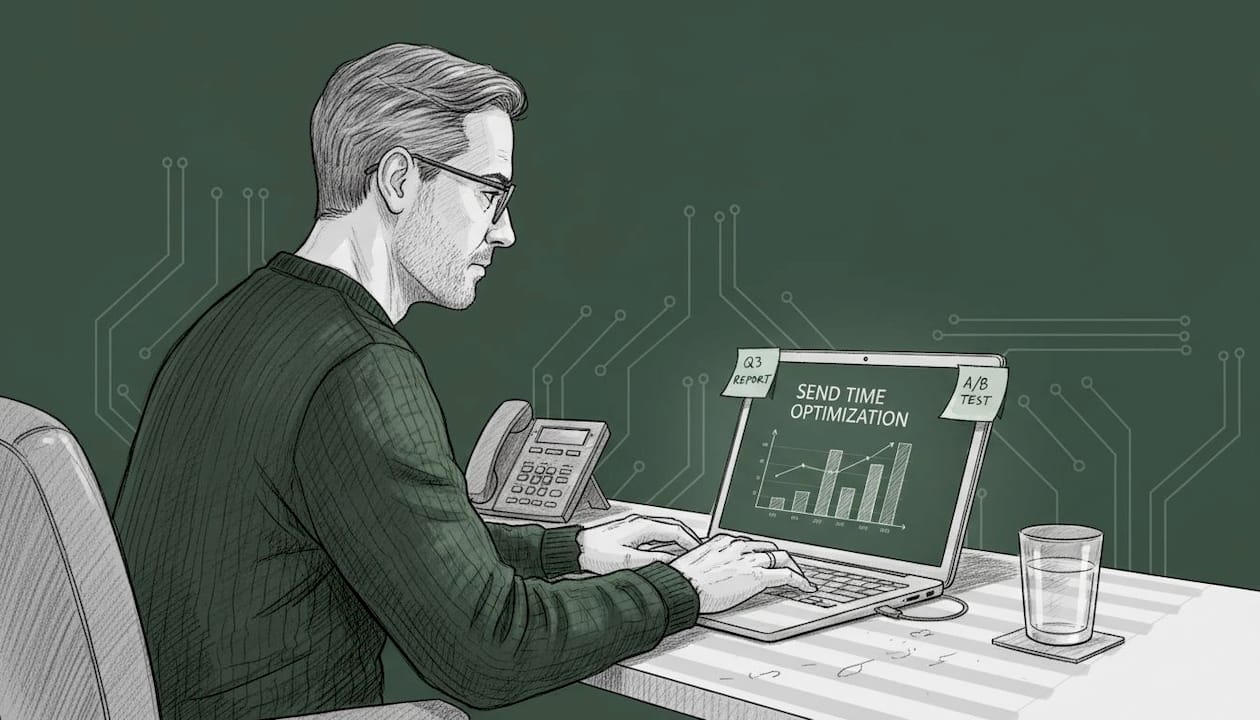
Pro Tip: Data hygiene is the foundation of accurate automation. If your subscriber profiles contain incorrect purchase dates, missing lifecycle tags, or duplicate contact records, your automated flows will misfire. A customer who already purchased shouldn’t receive a cart abandonment email. Audit your data quarterly to keep triggers accurate and your audience segmented correctly.
For a deeper look at building these flows strategically, the email automation deep dive covers architecture, trigger setup, and flow optimization in detail.
ROI and retention: Proving value with numbers
Brand managers are accountable to revenue. That means email marketing needs to speak the language of business outcomes, not just open rates. The good news is that email’s ROI story is stronger than most teams realize.
| Channel | Average ROI | Benchmarked by |
|---|---|---|
| Email marketing (e-commerce) | ~£41 per £1 spent | DMA 2026 |
| Paid social advertising | ~£2 to £5 per £1 spent | Industry averages |
| Paid search (PPC) | ~£2 per £1 spent | Industry averages |
| Influencer marketing | Variable, often hard to track | Platform-dependent |
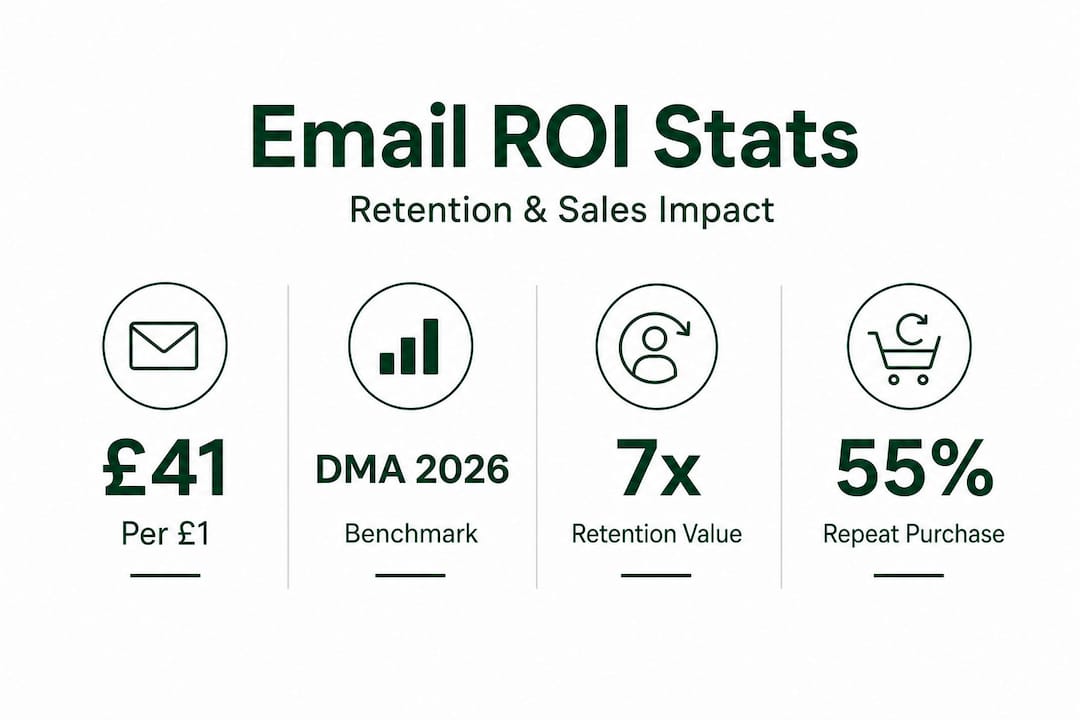
DMA benchmarks email ROI at £41 for every £1 invested, with e-commerce leading all sectors. That gap between email and paid channels reflects a structural difference: email operates on permission, familiarity, and behavioral context, while paid channels operate on interruption.
What makes retention-focused email particularly powerful is the compounding effect. A customer who makes a second purchase is significantly more likely to make a third. Brands that track email marketing metrics at the lifecycle level, meaning they monitor revenue per subscriber, repeat purchase rate, and customer lifetime value rather than just open and click rates, can see this compounding dynamic clearly in their data.
The challenge is that many teams don’t optimize for retention as a KPI. Lifecycle email is a strategic priority for retention and engagement according to Litmus research, yet only about a third of email teams formally track retention as a key performance indicator. That gap is where significant revenue gets left on the table.
Here’s where retention-focused email creates measurable business value:
- Reduced acquisition cost dependency: Every repeat purchase driven by email reduces how much you need to spend on paid acquisition to hit revenue targets.
- Higher average order value: Post-purchase sequences and loyalty campaigns consistently lift average order value because they’re selling to warm, engaged customers.
- Lower churn rate: Win-back flows and re-engagement campaigns extend customer lifecycles, which directly increases customer lifetime value.
- More predictable revenue: Automated flows generate consistent monthly revenue regardless of whether you run paid campaigns in a given period.
For teams ready to apply best practices for boosting retention, the starting point is connecting email performance to business KPIs rather than treating email analytics as a separate silo.
Getting started: Keys to building an effective email strategy
Building a retention-driven email program requires more than a platform and a list. It requires a deliberate architecture. Here’s a practical framework for getting it right.
Step 1: Define your objectives. Are you focused on new subscriber conversion, repeat purchase rate, or reactivating lapsed customers? Different objectives require different flows and different success metrics. Clarity here prevents the common mistake of building a program that does everything but optimizes nothing.
Step 2: Align your KPIs. Email marketing KPIs should connect to business outcomes. Open rate and click rate matter, but revenue per email, list growth rate, and subscriber lifetime value are the numbers that tell you whether your program is actually growing the business.
Step 3: Set up your core automation flows. Welcome, cart abandonment, and post-purchase are non-negotiable starting points. Build these before anything else. Email is a direct, cost-effective channel and a large, well-segmented opt-in list is one of your most valuable strategic assets.
Step 4: Personalize systematically. Start with purchase history and lifecycle stage as your primary segmentation variables. Build outward from there as you accumulate more behavioral data. Don’t wait until your data is perfect before you personalize. Start simple and iterate.
Step 5: Track and optimize. Set up weekly reporting on your core flows. Look at open rate, click rate, conversion rate, and revenue per email for each flow separately. Retention needs to be a core KPI to avoid the trap of optimizing entirely for acquisition metrics.
Here’s a comparison of two common strategic approaches:
| Approach | Focus | Risk | Outcome |
|---|---|---|---|
| More email volume | Broadcast campaigns, frequency | List fatigue, unsubscribes | Short-term revenue spikes |
| Lifecycle-centric | Triggered flows, segmentation | Slower to build | Compounding long-term revenue |
The contrast is stark. Brands chasing volume often see initial revenue bumps followed by declining list health and engagement. Lifecycle-centric programs take longer to architect, but they generate more predictable revenue, preserve list health, and outperform volume-based approaches over a 12-month horizon.
Pro Tip: Benchmark your program by campaign type and lifecycle stage, not generic industry averages. An abandoned cart email should hit a different conversion rate than a re-engagement win-back. Applying the same benchmark across all flows will lead you to false conclusions about what’s working.
For inspiration on what high-performing programs look like in practice, exploring effective retail email examples gives you real templates to model.
A hard-won truth: Retention demands more than just ‘sending more emails’
Here’s the perspective that most email marketing content won’t say plainly: the biggest mistake e-commerce brands make isn’t sending too few emails. It’s sending emails without a retention architecture underneath them.
We’ve seen brands with massive lists, sophisticated platforms, and weekly campaigns that generate disappointing repeat purchase rates. Why? Because their program was built around sends rather than stages. Every email treated every subscriber the same, regardless of where they were in their relationship with the brand.
More emails do not guarantee retention when they’re not aligned to lifecycle segments and measured against meaningful KPIs. The research backs this up. Brands that formally track retention as a KPI outperform those that don’t, because tracking forces you to build flows that actually serve retention as an outcome.
The automation nuance that gets missed most often is this: automation’s real advantage is context, not just scale. A triggered post-purchase email sent 24 hours after a first purchase, referencing the exact product bought and offering complementary recommendations, does more for retention than 10 generic promotional emails combined.
Data hygiene is the unsexy but essential piece. If your behavioral triggers are firing on stale or inaccurate data, your automation best practices are working against you. A customer who completed a purchase last week should not be receiving a win-back email today. These errors erode trust fast.
The brands that win at retention treat their email program the way a product team treats their product: they define clear goals, they iterate based on data, and they never confuse activity with outcomes.
Take the next step with proven email marketing expertise
If reading this has confirmed that your retention strategy needs a more systematic approach, you’re not alone. Many growth-focused brands hit a ceiling with email because they’ve built campaigns but not a retention architecture. At The Email Marketers, we specialize in building exactly that.
Browse our real-world results to see how data-driven lifecycle programs have transformed retention rates for e-commerce brands at scale. If you’re ready to move beyond campaign thinking, explore our specialized retention services designed to help DTC and subscription brands increase customer lifetime value systematically. You can also access our retention toolkit for practical frameworks you can implement immediately.
Frequently asked questions
How does email marketing outperform social or paid ads for e-commerce?
Email builds direct relationships through opt-in permission and behavioral automation, delivering higher trust and ROI than paid channels that rely on interruption-based targeting. When you own the subscriber relationship, you’re not dependent on algorithm changes or rising ad costs.
Which types of automated emails drive the most revenue?
Welcome flows, cart abandonment, and post-purchase sequences are the highest-revenue automated flows in e-commerce. Timely triggered messages aligned to actual customer behavior consistently outperform broadcast campaigns in both conversion rate and revenue per email.
Is personalization really effective for e-commerce email?
Yes, and the impact is measurable. Dynamic content blocks doubled member credit redemptions for Ana Luisa by replacing generic messaging with behavior-driven, individualized content that matched each subscriber’s engagement history.
What ROI can I expect from e-commerce email marketing?
Industry benchmarks are consistently strong. DMA’s 2026 research reports approximately £41 returned for every £1 invested in e-commerce email marketing, making it the highest ROI digital channel available to most brands.
What’s the biggest mistake brands make with email marketing?
Sending more volume without optimizing for lifecycle relevance. Retention is undervalued as a KPI across most email programs, which means brands optimize for sends and opens while the metrics that actually matter, repeat purchase rate and customer lifetime value, stagnate.


