.png)


Email Marketing Advantages for Business Owners in 2026

TL;DR:
- Email remains the most effective retention channel due to its high ROI, ownership, and ability to personalize at scale. Segmentation and behavior-driven automation significantly boost campaign performance, making email a continuously optimized system that fosters customer loyalty. Its measurable data and integration with other channels ensure marketers can refine strategies and build long-term customer relationships.
Every few years, someone declares email dead. They’re wrong every time. The email marketing advantages that made this channel worth investing in a decade ago have only compounded. Today, email sits at the intersection of owned media, behavioral data, and automation in a way no social platform or paid channel can replicate. If you’re a marketing professional or business owner trying to build real customer retention, not just reach, this is where to focus. What follows is a direct look at why email remains the highest-performing retention channel available, and exactly how to use it.
Table of Contents
- Key takeaways
- Email marketing advantages: cost and ROI
- Personalization and segmentation as performance levers
- Email as a measurable, high-intent channel
- Email as a continuous engagement system
- My perspective on email marketing in 2026
- Ready to put these advantages to work?
- FAQ
Key takeaways
| Point | Details |
|---|---|
| Superior ROI per dollar | Email returns $36 for every $1 spent, far ahead of other digital channels. |
| Segmentation drives performance | Over 90% of email professionals say segmentation measurably improves campaign results. |
| Every action is trackable | Opens, clicks, purchases, and unsubscribes all generate data you can act on immediately. |
| Always-on beats campaign-based | Top teams shift from batch-and-blast to continuous engagement tied to behavior and lifecycle. |
| AI scales personalization | Behavior-driven automation lets you deliver one-to-one relevance without one-to-one effort. |
Email marketing advantages: cost and ROI
Let’s start with money, because that’s where the conversation usually needs to begin. Email is owned media. You’re not renting space from Google, Meta, or TikTok. You’re not bidding against competitors for eyeballs. When you build a quality list and send a well-crafted campaign, you control the channel entirely.
The numbers back this up in a way that’s hard to argue with. Email generates $36 ROI for every $1 spent, compared to the typical $2 to $5 return most digital marketing channels produce. That isn’t a rounding error. It’s a structural advantage rooted in low distribution costs, high audience intent, and direct access to an inbox that the subscriber chose to share.
For businesses of any size, that cost structure matters differently. A bootstrapped DTC brand can run email campaigns at a fraction of what a comparable paid social campaign costs, with better segmentation and higher conversion rates. An 8-figure brand can use automation to replicate that personalized experience at scale without proportionally scaling its team.
- Low fixed costs: Email platforms charge per send or per subscriber, not per click or per impression.
- No algorithm dependency: Your list is yours. A platform algorithm change doesn’t erase your reach overnight.
- Automation multiplies output: A single well-built flow runs continuously without ongoing labor costs.
- Compounding returns: List quality and sender reputation improve over time, making each campaign more cost-effective than the last.
Pro Tip: Don’t evaluate email’s cost against other email platforms. Compare it against what you’d spend on paid social to reach the same number of high-intent, opted-in buyers. The gap is usually eye-opening.
You can explore how brands measure and optimize email ROI across different lifecycle stages, but the core principle holds: email’s cost-to-return ratio is the strongest in digital marketing.
Personalization and segmentation as performance levers
Here’s where the benefits of email marketing get genuinely sophisticated. Personalization is not just adding a first name to a subject line. It’s using behavioral signals, purchase history, lifecycle stage, and browsing data to deliver a message that feels like it was written for one person. When you do it right, it is.

Over 90% of email marketing professionals say segmentation measurably improves campaign performance. That’s not a consensus built on theory. It reflects what practitioners see when they split a generic list into segments and watch conversion rates climb.
How segmentation actually works
The most effective segmentation strategies layer multiple signals rather than relying on a single dimension:
- Demographics: Age, location, gender, and job role inform messaging tone and offer relevance.
- Purchase behavior: What someone bought, when they bought it, and how often tells you where they are in the customer lifecycle.
- Engagement history: Subscribers who open every email and those who haven’t opened in 90 days require completely different approaches.
- Lifecycle stage: A first-time buyer, a lapsed customer, and a VIP each need a different conversation.
The practical result is that you’re not sending one version of a message to 50,000 people. You’re sending 12 versions, each relevant to a specific segment, each with higher expected engagement than a single generic blast.
AI enables behavior-driven personalization that goes further still, adapting content and send timing in real time based on how individual subscribers interact with your brand. This transforms a static email calendar into an adaptive system that responds to actual buyer behavior. The role of email segmentation in driving that kind of personalization at scale is one of the most underused advantages available to retention-focused marketers.
Pro Tip: Start segmentation with three buckets: new subscribers, active buyers, and lapsed customers. Once your flows are working for those three, layer in behavioral triggers. Most teams see a meaningful lift before they ever get to demographic slicing.
Email as a measurable, high-intent channel
One of the clearest email marketing benefits compared to every other channel is the quality of its data. Social platforms give you reach and impressions. Email gives you behavioral proof.
Every action inside an email campaign is trackable: opens, clicks, unsubscribes, purchases, and even time spent reading. Each of those signals tells you something specific. A high open rate with low clicks means your subject line is strong but your offer or content isn’t landing. A high click rate with low purchase conversion points to a landing page problem, not an email problem. You can trace the issue and fix it without guessing.
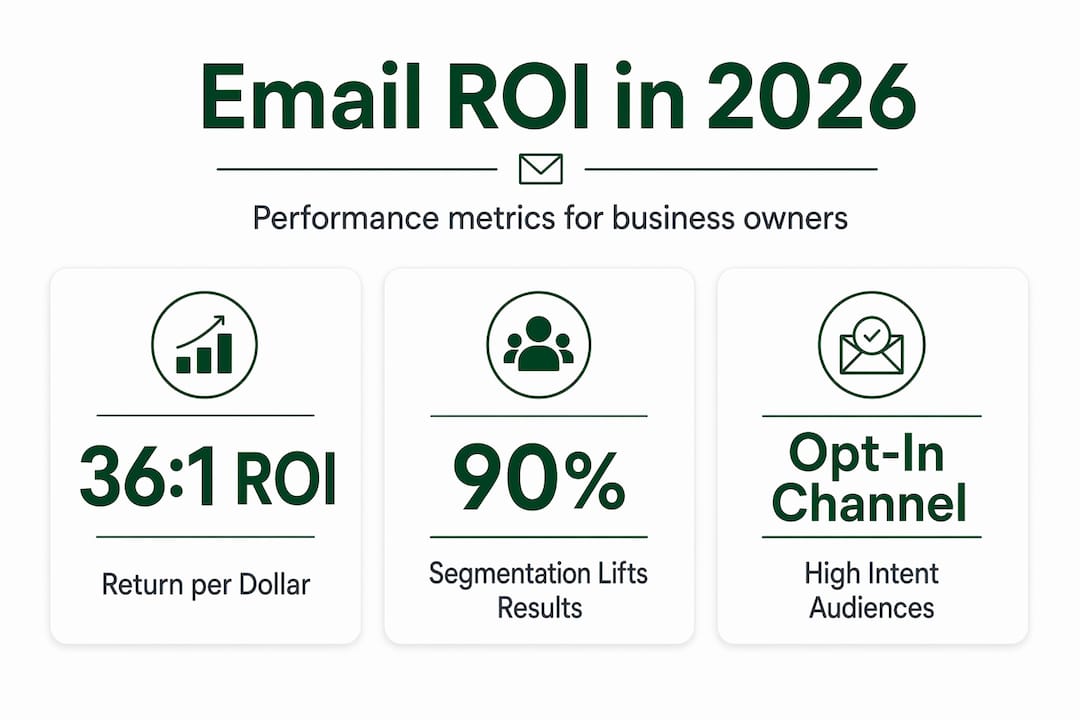
Email is also an opt-in, high-intent channel, meaning your audience chose to hear from you. That baseline level of intent is something paid media simply can’t match. A subscriber who signed up after making a purchase is already predisposed to buy again. You’re not interrupting strangers. You’re continuing a conversation with customers who raised their hand.
What you should actually be measuring
| Metric | What it signals | What to do with it |
|---|---|---|
| Open rate | Subject line and sender reputation strength | Test subject lines; monitor deliverability trends |
| Click-to-open rate | Content and offer relevance | Improve copy, visuals, and CTA alignment |
| Conversion rate | Offer and landing page effectiveness | A/B test offers; optimize post-click experience |
| Revenue per email | Overall campaign profitability | Use to compare segments and prioritize top performers |
| Unsubscribe rate | List fatigue and relevance issues | Review send frequency and content targeting |
True ROI measurement connects email activity to pipeline progression, repeat purchase rates, and customer retention. not just opens. Brands that measure email this way consistently make better decisions about where to invest in their programs. For a structured approach to this, Theemailmarketers has a complete ROI measurement guide worth working through.
Email as a continuous engagement system
The most significant shift in how high-performing teams think about email marketing strategy is the move away from campaign-centric thinking. A campaign implies a start and an end. A customer relationship doesn’t have that structure.
Email marketing is evolving from campaign-driven to always-on engagement, with deliverability, data quality, and personalization working as an interconnected system rather than separate levers. That distinction changes how you build your program entirely.
Here’s what an always-on email system actually involves:
- Automated lifecycle flows that trigger based on subscriber behavior, not a calendar date. A post-purchase thank-you sequence, a win-back flow for lapsed customers, a product replenishment reminder. These run without intervention and keep your brand present at the right moments.
- Deliverability management as an ongoing practice. List hygiene and suppression logic are not optional maintenance tasks. They determine whether your emails reach inboxes at all. Suppressing unengaged contacts, removing hard bounces, and honoring unsubscribes promptly protect your sender reputation and your ability to reach active subscribers.
- Data feedback loops where engagement signals from every email inform the next send. Which products drove the most clicks last week? Which subject line format is performing above average for your reactivation segment? That data should be shaping every subsequent campaign.
- Integration with other channels. Email doesn’t operate in isolation. It works with SMS, paid retargeting, and on-site personalization to create a consistent customer experience. The combination of paid advertising and email for customer loyalty is one of the more underexplored advantages in retention marketing.
Pro Tip: Audit your current email program against three questions: Are your flows running on behavioral triggers or just calendar sends? Is your list suppression logic current? Are you using engagement data to inform future campaigns? If the answer to any of these is no, that’s where your next lift is coming from.
My perspective on email marketing in 2026
I’ve spent years watching brands obsess over open rates and completely miss what’s driving their actual results. Open rates tell you almost nothing about business impact. They measure whether a subscriber pressed a button. Measuring true email ROI means connecting email activity to repeat purchase rate, average order value growth, and customer retention over time.
What I see in high-performing programs is a different mindset entirely. They treat email as a system that learns. Every send generates data. That data informs segmentation. Better segmentation produces more relevant content. More relevant content drives engagement. Engagement improves deliverability. Better deliverability means more revenue. It’s a flywheel, and most teams are only spinning one or two parts of it.
The other thing I’d push back on is the idea that AI replaces strategy. It doesn’t. Behavior-driven personalization at scale requires a human to decide what signals matter, what the brand voice should be, and what outcome you’re actually optimizing for. AI executes faster and at greater scale. But the strategy, the understanding of your customer, that still has to come from you.
The brands that will dominate retention in the next few years are the ones treating email not as a broadcast tool but as a continuously optimized customer relationship system.
— Melanie
Ready to put these advantages to work?
If you’ve read this far, you already understand that email marketing effectiveness isn’t about sending more. It’s about sending smarter. Theemailmarketers builds retention systems for e-commerce brands that are already scaling but leaving revenue on the table through generic campaigns, weak segmentation, or flows that haven’t been touched since launch.
We work with 8-figure DTC brands, VC-backed companies, and growth-focused retailers to build automated programs that turn one-time buyers into repeat customers. You can see exactly how this looks in practice through our client case studies, or explore the tools and frameworks inside the Retention Lab if you want to build this capability in-house.
FAQ
What is the average ROI of email marketing?
Email marketing delivers an average return of $36 for every $1 spent, making it the highest-ROI channel in digital marketing. This figure comes from Litmus research across 500 marketing professionals.
Why is segmentation so important for email performance?
Segmentation improves performance according to over 90% of email marketing professionals because it ensures subscribers receive content relevant to their behavior and lifecycle stage rather than generic mass messaging.
How does email marketing compare to social media for retention?
Email is an owned channel where your audience opted in, giving you direct access without algorithm dependency. Social platforms can reduce your organic reach at any time, while your email list remains yours to communicate with directly.
What metrics actually matter for email ROI?
Open rates are a surface metric. The metrics that connect to real business outcomes are revenue per email, repeat purchase rate influenced by email, and customer retention rate among engaged subscribers.
How does AI improve email marketing results?
AI enables real-time, behavior-driven personalization by adapting content and send timing based on individual subscriber actions, turning static sequences into adaptive systems that respond to actual buyer behavior.


