.png)


Effective SMS campaign examples to boost DTC retention
TL;DR:
- Effective SMS campaigns prioritize engagement, timing, personalization, and offer value.
- Personalized onboarding, cart recovery, and exclusive loyalty offers drive significant customer retention.
- Creativity and data-driven segmentation make SMS marketing more impactful than generic messaging.
Keeping DTC customers coming back is one of the hardest problems in e-commerce right now. Paid acquisition costs keep climbing, and one-time buyers are everywhere. SMS marketing cuts through the noise in a way most channels simply can’t, but only when campaigns are built with strategy, creativity, and real personalization. Generic mass blasts waste your list and erode trust fast. This article walks through proven SMS campaign examples across the full customer lifecycle, from welcome flows to flash sales, so you can see exactly what works and why, and start applying those lessons to your own retention strategy.
Table of Contents
- How to evaluate effective SMS campaigns for DTC brands
- Welcome flows: Onboarding new subscribers with impact
- Cart abandonment: Winning back interested shoppers
- VIP and loyalty campaigns: Making repeat buyers feel valued
- Product drops, restocks, and flash sales: Driving urgency and FOMO
- Why creativity and personalization define SMS campaign winners
- Ready to elevate your SMS marketing strategy?
- Frequently asked questions
Key Takeaways
| Point | Details |
|---|---|
| Personalize every message | SMS campaigns that use customer data and segmentation outperform generic mass texts. |
| Focus on timing and relevance | The right message at the right moment, such as post-abandonment or product drop, drives superior retention. |
| Test and innovate | Continuous experimentation and fresh campaign logic uncover new opportunities to boost repeat purchases. |
| Reward loyal customers | VIP and loyalty SMS programs keep your best customers engaged and buying more often. |
How to evaluate effective SMS campaigns for DTC brands
Before you study any campaign example, you need a clear framework for judging what makes SMS actually work. Not every campaign that gets opens is driving retention. Not every discount text is building loyalty. The best SMS campaigns score well across four dimensions: engagement, timing, personalization, and offer value.
Engagement means your message gets a reaction, whether that’s a click, a reply, or a purchase. Timing means the message arrives when the customer is most receptive, not at 2 a.m. or three days after the moment has passed. Personalization means the message feels like it was written for that specific customer, not blasted to 50,000 people. Offer value means the incentive or information is genuinely worth the customer’s attention.
Here are the core benchmarks to track for SMS campaign performance:
- Open rate: SMS averages above 90%, far higher than email
- Click-through rate (CTR): Strong SMS CTR sits between 20% and 35%
- Conversion rate: Top campaigns convert 5% to 15% of clicks into purchases
- Opt-out rate: Keep this below 3% to protect list health
SMS outpaces other marketing channels for direct response in e-commerce, which makes it a retention powerhouse when used correctly. The problem is that most brands treat SMS like a megaphone instead of a conversation. Spammy language, over-messaging, and irrelevant offers are the fastest ways to kill your list.
A solid text message strategy starts with knowing your segments before you write a single word. Reviewing SMS best practices regularly keeps your campaigns sharp and compliant. You can also layer in AI-driven ROI tips to optimize send times and offer logic at scale.
Pro Tip: Use dynamic segmentation, meaning segments that update automatically based on purchase behavior, browse history, and engagement signals, to send messages that feel personal every single time without manual list management.
Welcome flows: Onboarding new subscribers with impact
Now that you know what to look for, here’s where great SMS begins: onboarding new customers right. The first message a new subscriber receives sets the tone for your entire relationship. Get it wrong and you lose them before they ever buy. Get it right and you can turn a curious opt-in into a loyal customer within days.
The most effective welcome flows combine urgency with warmth. A new subscriber just raised their hand and said they want to hear from you. That’s a high-intent moment. Capitalize on it immediately.
Here’s a proven welcome flow structure that high-performing DTC brands use:
- Message 1 (within 5 minutes of opt-in): Welcome message with an immediate discount code, 10% to 15% off, and a clear link to shop
- Message 2 (24 hours later, if no purchase): Soft reminder with social proof, a bestseller highlight, or a customer review
- Message 3 (48 to 72 hours later, if still no purchase): Urgency message noting the discount expires soon
A real example: a DTC skincare brand ran a welcome flow offering 12% off the first order with a personalized product recommendation based on the quiz the subscriber completed at opt-in. The result was a 22% list-to-order conversion rate within 72 hours.
“Your skin deserves better. Welcome to [Brand]! Here’s 12% off your first order, picked just for your skin type: [link]. Expires in 48 hrs. Reply STOP to opt out.”
Automated welcome texts increase first-order conversions by up to 20%, which makes this the single highest-ROI flow you can build. Strong SMS onboarding flows and well-designed retail SMS initiatives both confirm that speed and personalization are the two variables that matter most in the welcome window.
Cart abandonment: Winning back interested shoppers
Once new customers are welcomed, one of the biggest retention wins is rescuing abandoned carts. Cart abandonment is painful because these shoppers already showed purchase intent. They found a product they liked, added it, and then left. SMS is uniquely powerful here because it reaches people faster than email and feels more immediate.
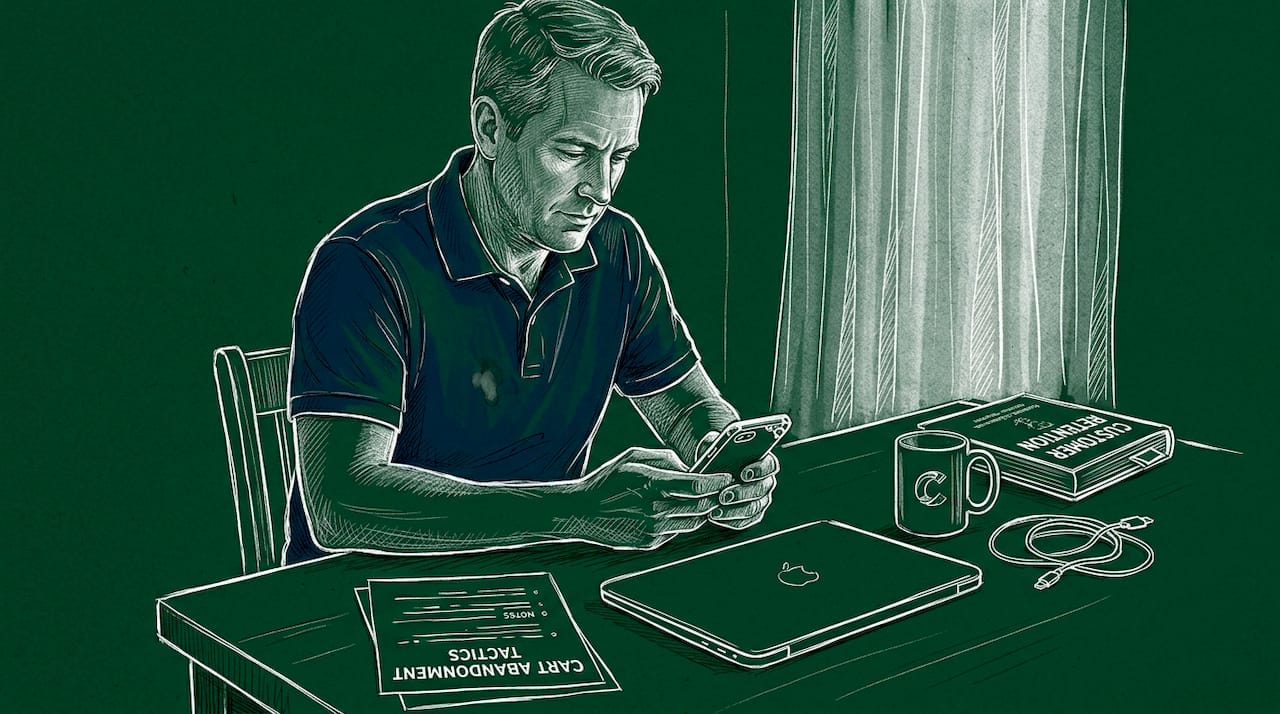
Personalized abandonment messages can boost recovery rates by over 15%, and the difference between a generic reminder and a personalized one is enormous. Mentioning the specific product, using the customer’s first name, and including a direct link to the cart are non-negotiable.
| Campaign element | Generic message | Personalized message |
|---|---|---|
| Product mention | None | Specific item named |
| Incentive | None or flat discount | Tailored offer based on cart value |
| Timing | 24 hours after abandonment | 1 hour after abandonment |
| Recovery rate | 3% to 5% | 15% to 20% |
| CTR | 8% to 12% | 25% to 35% |
Best practices for cart abandonment SMS:
- Send within 60 minutes of abandonment for the highest recovery rates
- Name the product the customer left behind
- Add a small incentive for high-value carts, like free shipping
- Keep it under 160 characters so it reads as one clean message
- Include a direct cart link so there’s zero friction to return
Using smart SMS recovery tactics means thinking about the customer’s mindset at the moment they abandoned. Sometimes it was price. Sometimes it was distraction. Your message should address both possibilities without being pushy.
VIP and loyalty campaigns: Making repeat buyers feel valued
Beyond single purchases, SMS loyalty programs turn good customers into brand champions. The brands winning at retention in 2026 are the ones making their best customers feel like insiders, not just buyers. SMS is the perfect channel for this because it’s intimate and immediate in a way that email or app notifications simply aren’t.
The most effective loyalty SMS campaigns fall into three categories:
- Points reminders: “You’re 50 points away from a free gift. Shop now: [link]”
- Early access and sneak peeks: “VIP exclusive: our new drop goes live for you 24 hours early. [link]”
- Birthday and anniversary offers: Personalized discounts tied to the customer’s special dates
Exclusive offers via SMS can double repeat purchase rates for top customer segments, which is a staggering lift for a single channel. The key is making the offer feel genuinely exclusive, not recycled from your public promotions.
| Feature | SMS loyalty | Email loyalty | App notifications |
|---|---|---|---|
| Open rate | 90%+ | 20% to 30% | 40% to 60% |
| Perceived exclusivity | Very high | Medium | Medium |
| Response speed | Minutes | Hours | Hours |
| Opt-out risk | Medium | Low | Low |
Pro Tip: Tier your VIP SMS list into two or three levels based on lifetime spend. Send your most exclusive offers only to the top tier. When customers know there’s a higher level to reach, they spend more to get there. Review the full breakdown of loyalty program benefits to structure your tiers effectively.
Product drops, restocks, and flash sales: Driving urgency and FOMO
Let’s look at how SMS channels can turn inventory changes into irresistible opportunities. Nothing drives immediate action like scarcity and time pressure, and SMS is the fastest way to deliver that message directly into someone’s hand.
SMS flash sale alerts often outperform email in conversion rates by 30% or more, and the reason is simple: people read texts within three minutes of receiving them, while emails can sit unopened for hours or days.
Here’s what makes product drop and flash sale SMS campaigns work:
- Lead with the scarcity: “Only 50 units left” or “Ends tonight at midnight”
- Use a clear, single call to action: One link, one goal
- Send at peak shopping hours: 10 a.m. to 12 p.m. or 7 p.m. to 9 p.m. local time
- Segment by past purchase behavior: Notify customers who previously bought from that category first
- Follow up once: A second message two hours before the sale ends can recover late converters
Stat to know: A DTC apparel brand using a restock alert campaign for a sold-out item generated a 38% CTR and recovered $47,000 in revenue within four hours of sending.
Staying current with the latest SMS trends helps you time these campaigns around platform behavior shifts and consumer expectations. The brands that win with flash sales treat every drop like a live event, building anticipation before the message even lands.
Why creativity and personalization define SMS campaign winners
Here’s the uncomfortable truth most SMS guides won’t tell you: the majority of DTC brands are running the same five campaign types with the same generic copy, and they wonder why their results plateau. Studying campaign frameworks is useful. Copying them without adapting them to your brand voice and customer data is a waste of your list.
The brands we see outperforming their competitors aren’t sending more texts. They’re sending smarter ones. They update their campaign logic every quarter. They A/B test message tone, not just offers. They treat every text as a one-to-one conversation, not a broadcast.
Following personalized SMS best practices is the baseline. The real edge comes from creative segmentation, meaning building audiences based on behavioral signals that most brands ignore, like time-since-last-purchase, category affinity, and engagement frequency. When you combine that data with genuinely creative copy, your SMS channel stops feeling like a discount machine and starts feeling like a brand relationship. That’s what drives retention at scale.
Ready to elevate your SMS marketing strategy?
Innovative SMS strategies are the foundation. Here’s how to take yours to the next level. The campaign examples in this article represent what’s possible when strategy, data, and creativity align. But building and optimizing these flows in-house takes time, expertise, and constant iteration.
The Email Marketers agency specializes in exactly this work for DTC brands ready to move beyond generic blasts. Explore real SMS campaign case studies to see the retention lifts and revenue results our clients achieve. Or step into the Retention Lab for tools and frameworks built specifically for high-growth e-commerce brands. Your customers are worth more than one purchase. Let’s build the campaigns that prove it.
Frequently asked questions
What types of offers work best for SMS welcome campaigns?
Short-term discounts or exclusive early access are proven to drive high first-purchase rates. Automated welcome texts increase first-order conversions by up to 20%, making speed and relevance the two most important variables.
How often should e-commerce brands send SMS messages?
Most brands see the best retention with 2 to 4 highly relevant messages per month. Since SMS outpaces other channels for direct response, quality and targeting matter far more than volume.
Do SMS cart abandonment reminders really work?
Yes, SMS reminders can recover up to 15% or more of abandoned carts when personalized and timed well. Personalized abandonment messages consistently outperform generic reminders by a wide margin.
What’s the ROI of SMS flash sales versus email blasts?
SMS flash sales often convert 30% or more higher than email blasts, especially for time-limited offers. The speed at which texts are read gives SMS flash sale alerts a structural advantage over email for urgency-driven campaigns.


