.png)


Community Building With Email: Driving DTC Loyalty
Most American businesses rely on email, yet only about 30 percent build lasting communities through their campaigns. This gap matters because a strong email community helps brands connect on a deeper level and nurture loyalty well beyond a single sale. If you want to turn your list into an active, engaged group of American customers, discover practical ways to transform routine emails into meaningful connections.
Table of Contents
- Community Building With Email Defined
- Key Email Strategies For Fostering Community
- Segmentation And Personalization Tactics
- Automated Flows To Nurture Community
- Risks, Mistakes, And Best Practices
Key Takeaways
| Point | Details |
|---|---|
| Email Community Building | Transform transactional interactions into meaningful relationships through personalized and interactive communication. |
| Segmentation and Personalization | Use targeted audience grouping and custom messaging to enhance engagement and foster loyalty. |
| Automated Flows | Implement strategic email automation to maintain consistent and valuable customer connections without manual intervention. |
| Risks and Best Practices | Mitigate potential risks by prioritizing subscriber consent, maintaining email relevance, and ensuring proper technical infrastructure. |
Community Building With Email Defined
Email community building represents a strategic approach to transforming transactional interactions into meaningful relationships between brands and customers. At its core, this methodology goes beyond simple communication - it creates an ecosystem where customers feel genuinely connected, heard, and valued. Community building through email marketing enables direct, personalized engagement that transcends traditional one-way marketing channels.
The fundamental goal of email community building is to facilitate active and interactive communication that empowers consumers. This means developing email strategies that encourage dialogue, solicit feedback, and make customers feel like integral participants rather than passive recipients. By creating segments, personalizing content, and designing interactive email experiences, brands can transform their communication from broadcast messages to collaborative conversations.
Successful email community building involves multiple strategic elements. These include segmentation based on customer behaviors, developing personalized content pathways, creating exclusive subscriber experiences, and establishing consistent communication rhythms that build anticipation and trust. The most effective approaches blend data-driven insights with genuine human connection, ensuring that each email feels like a meaningful touchpoint rather than a generic marketing push.
Pro Tip - Email Community Engagement: Design your email campaigns with interactive elements like polls, surveys, or exclusive member-only content to transform passive readers into active community participants. Encourage two-way communication by consistently responding to customer feedback and making subscribers feel genuinely heard.
Here’s a comparison of essential email community-building strategies and their unique benefits:
| Strategy | Primary Focus | Community Impact |
|---|---|---|
| Segmentation | Targeted audience grouping | Higher relevance, loyalty |
| Personalization | Custom message tailoring | Deeper engagement, retention |
| Interactive Elements | Polls, surveys, two-way dialog | Active participation, trust |
| Consistent Engagement | Regular, expected communication | Sustained interest, growth |
Key Email Strategies for Fostering Community
Building a thriving email community requires strategic approaches that transform passive communication into dynamic, interactive experiences. Permission-based marketing stands as the foundational principle, ensuring that every email interaction is welcome and anticipated by subscribers. Effective email marketing campaigns bridge critical gaps between businesses and consumers, creating meaningful connections that extend beyond transactional relationships.
Key strategies for fostering community through email include segmentation, personalization, and consistent engagement. Permission-based emails that encourage active consumer participation represent a powerful approach to building genuine connections. This means developing targeted content pathways that speak directly to specific subscriber interests, creating micro-communities within your broader email audience. Brands can achieve this by analyzing customer data, tracking engagement metrics, and crafting highly relevant communication streams that feel individually tailored.

Successful email community strategies also emphasize interactive elements that transform subscribers from passive recipients to active participants. This might include incorporating feedback mechanisms, user-generated content opportunities, exclusive member experiences, and responsive communication channels. Top 6 Ways to Build a High-Converting Email List for Your E-Commerce Business can provide additional insights into creating robust subscriber engagement approaches.
Pro Tip - Email Community Activation: Design email campaigns with embedded interactive elements like polls, surveys, and exclusive member-only content to transform passive readers into active community participants. Consistently respond to customer feedback to demonstrate that subscriber voices genuinely matter in your brand ecosystem.
Segmentation and Personalization Tactics
Email marketing success hinges on understanding that one-size-fits-all approaches are obsolete. Audience segmentation represents a sophisticated strategy for delivering targeted, meaningful communication that resonates with specific customer groups. Multi-objective personalization techniques can dramatically enhance email engagement, allowing brands to balance organizational goals with individual subscriber preferences.
Effective segmentation goes beyond basic demographic categorizations. Advanced strategies involve analyzing behavioral data, purchase history, engagement levels, and predictive indicators to create nuanced audience groups. Building a high-quality email list requires strategic segmentation and personalized messaging that speaks directly to subscriber interests. Brands can leverage data points like purchase frequency, product preferences, browsing behavior, and interaction patterns to develop granular segmentation approaches that feel individually crafted.
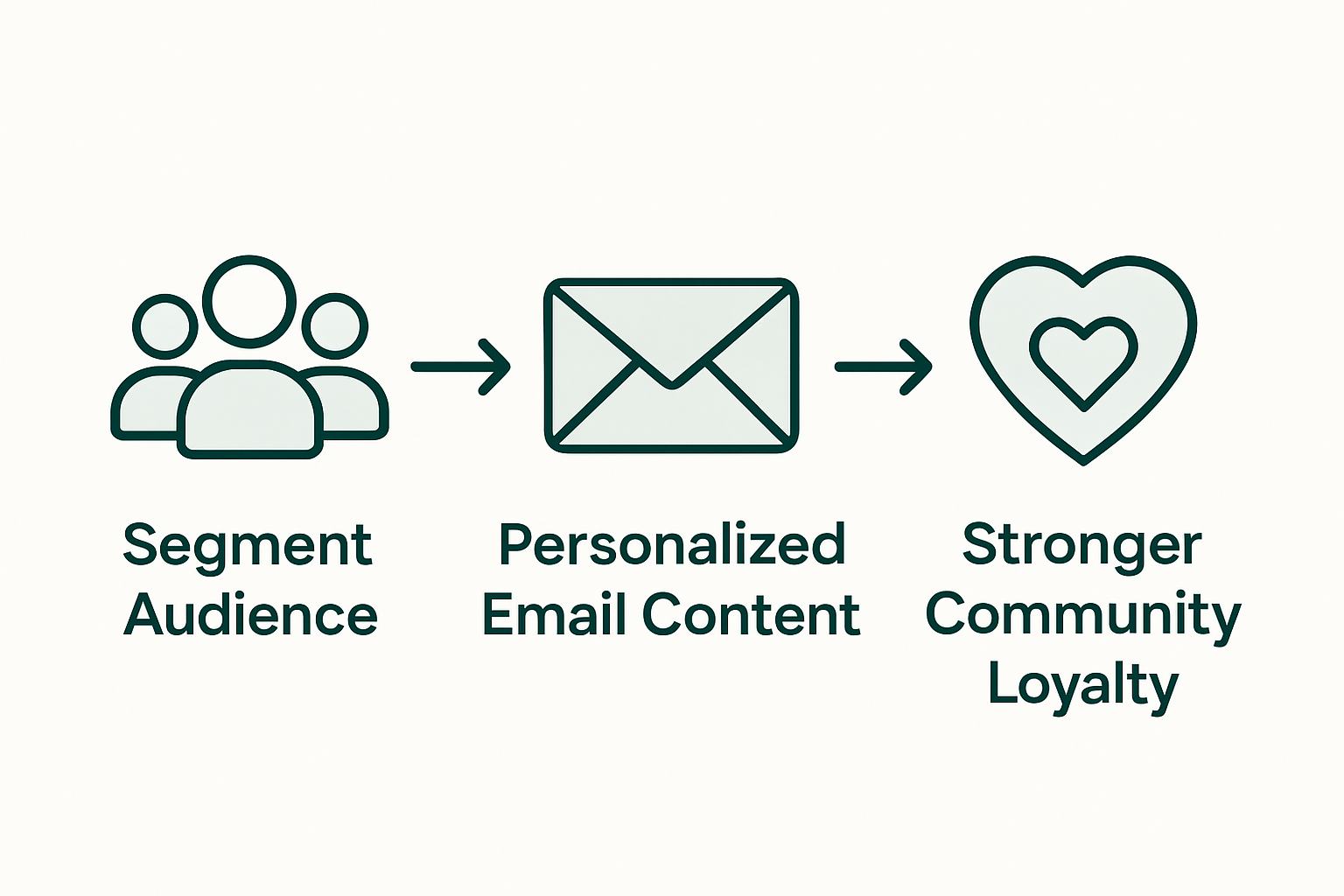
Technological advancements have transformed personalization from a nice-to-have into a critical marketing requirement. Email Marketing Segmentation: The Essential How-To Guide illustrates the complexity of creating dynamic segments that evolve with customer behavior. Modern personalization tactics include dynamic content insertion, predictive product recommendations, time-zone optimized sending, and contextually relevant messaging that adapts to individual customer journeys.
Pro Tip - Segmentation Precision: Continuously refine your audience segments by tracking micro-level engagement metrics and creating progressively more sophisticated persona-based communication streams. Treat segmentation as an ongoing optimization process, not a static classification system.
Automated Flows to Nurture Community
Email automation represents a strategic approach to building consistent, meaningful connections with customers without requiring constant manual intervention. Marketing automation through email enables significant improvements in operational efficiency and scalability, transforming how brands communicate and engage with their audience. By designing intelligent, responsive email sequences, businesses can create personalized experiences that feel intimate and intentional, even when delivered at scale.
Successful automated flows go beyond simple transactional messages. Nurturing customer relationships through carefully crafted automated emails requires a deep understanding of customer journey stages and emotional triggers. Key automated flows might include welcome sequences, post-purchase follow-ups, re-engagement campaigns, and milestone celebrations. These strategically timed communications create touchpoints that make subscribers feel recognized, valued, and part of a larger community ecosystem.
The Best Email Flows to Boost Engagement & Drive Conversions highlights the importance of dynamic content that adapts to individual user behaviors. Modern automated flows leverage advanced segmentation, predictive analytics, and machine learning to create hyper-personalized communication pathways. Brands can now design email sequences that dynamically adjust content, timing, and messaging based on real-time subscriber interactions, preferences, and engagement patterns.
Pro Tip - Flow Intelligence: Map your automated email sequences like a customer journey, ensuring each message provides genuine value and moves subscribers closer to feeling emotionally connected to your brand community. Continuously test and refine your flows based on granular performance metrics.
Risks, Mistakes, and Best Practices
Email marketing carries substantial potential alongside significant risks that brands must carefully navigate. Email marketing practices of online services raise critical concerns about data privacy and user consent, demanding a proactive and ethical approach to customer communication. Understanding potential pitfalls is crucial for maintaining trust and preventing potential legal or reputational damage.
Persuasive email marketing strategies require careful ethical considerations to avoid manipulative tactics that could alienate subscribers. Common mistakes include overwhelming frequency, irrelevant content, non-transparent data usage, and failing to provide clear opt-out mechanisms. Brands must strike a delicate balance between engagement and respect, ensuring that every communication provides genuine value and maintains subscriber autonomy. Segmentation, personalization, and consent-driven approaches become critical safeguards against potential trust erosion.
Technical risks in email community building extend beyond content considerations. Potential hazards include poor list hygiene, inconsistent sender reputation, inadequate email authentication protocols, and sophisticated spam filtering challenges. Risks, Mistakes, and Best Practices in Digital Marketing emphasize the importance of robust technical infrastructure, including implementing SPF, DKIM, and DMARC protocols to ensure reliable email delivery and maintain sender credibility.
The following table summarizes common risks in email marketing and ways to mitigate them:
| Risk Type | Example Issue | Mitigation Approach |
|---|---|---|
| Privacy Violation | Sending without consent | Use opt-in, clear privacy policy |
| Irrelevant Content | Mass emails to all segments | Segment and personalize messaging |
| Technical Problems | Poor delivery, spam filtering | Set up SPF, DKIM, DMARC protocols |
| Engagement Fatigue | Excessive email frequency | Optimize send schedules, test frequency |
Pro Tip - Ethical Email Engagement: Develop a transparent communication framework that prioritizes subscriber consent, provides clear value in every interaction, and allows easy, immediate opt-out options. Treat each email as a privilege, not an entitlement.
Transform Your Email Community Into Lasting Loyalty Today
The challenge explored in “Community Building With Email: Driving DTC Loyalty” lies in moving beyond generic email blasts to create genuine, interactive communities through segmentation, personalization, and automated flows. If you are seeking to turn passive subscribers into engaged brand advocates and foster emotional connections that drive repeat purchases you understand the importance of embracing permission-based marketing and dynamic email strategies tailored to individual customer journeys. Many brands struggle with maintaining consistent engagement while respecting subscriber preferences and privacy yet these aspects are critical for building trust and lasting loyalty.
At The Email Marketers, we specialize in crafting AI-driven, strategic email and SMS campaigns designed for exactly these challenges. Our expert team builds personalized segmentation pathways and automated flows that nurture your community with relevant, compelling communication. We take pride in transforming your audience into raving fans by blending data insights with creative storytelling that resonates deeply. Ready to elevate your retention marketing and create a thriving customer community that stands the test of time? Explore how our targeted solutions can help you design impactful, interactive campaigns by visiting our website and start your path toward measurable growth and loyalty today.
Frequently Asked Questions
What is email community building?
Email community building is a strategic approach that transforms transactional interactions into meaningful relationships between brands and customers. It focuses on creating a connected ecosystem where customers feel valued and engaged through personalized communication.
How can segmentation improve email engagement?
Segmentation allows brands to group their audience based on behaviors and preferences, delivering targeted, relevant content that resonates with specific customer groups. This increases engagement, loyalty, and overall email marketing effectiveness.
What role does personalization play in email marketing?
Personalization tailors messages to individual subscribers based on their interests and behaviors. This practice deepens engagement, fosters retention, and ensures that communications feel relevant and relatable to each recipient.
Why are interactive elements important in email campaigns?
Interactive elements, such as polls and surveys, encourage active participation from subscribers. This two-way communication helps build trust and strengthens the sense of community, moving subscribers from passive recipients to active contributors.
Recommended
- Top 6 Ways to Build a High-Converting Email List for Your E-Commerce Business
- Email Marketing for B2C: Proven Strategies and Examples for 2025
- The Email Marketers | Email Marketing Agency for E-Commerce
- 3 Excellent Examples of Email Marketing for Food and Beverages
- Understanding the Importance of Customer Communication – My WordPress


