.png)


Automated email system: the e-commerce retention guide
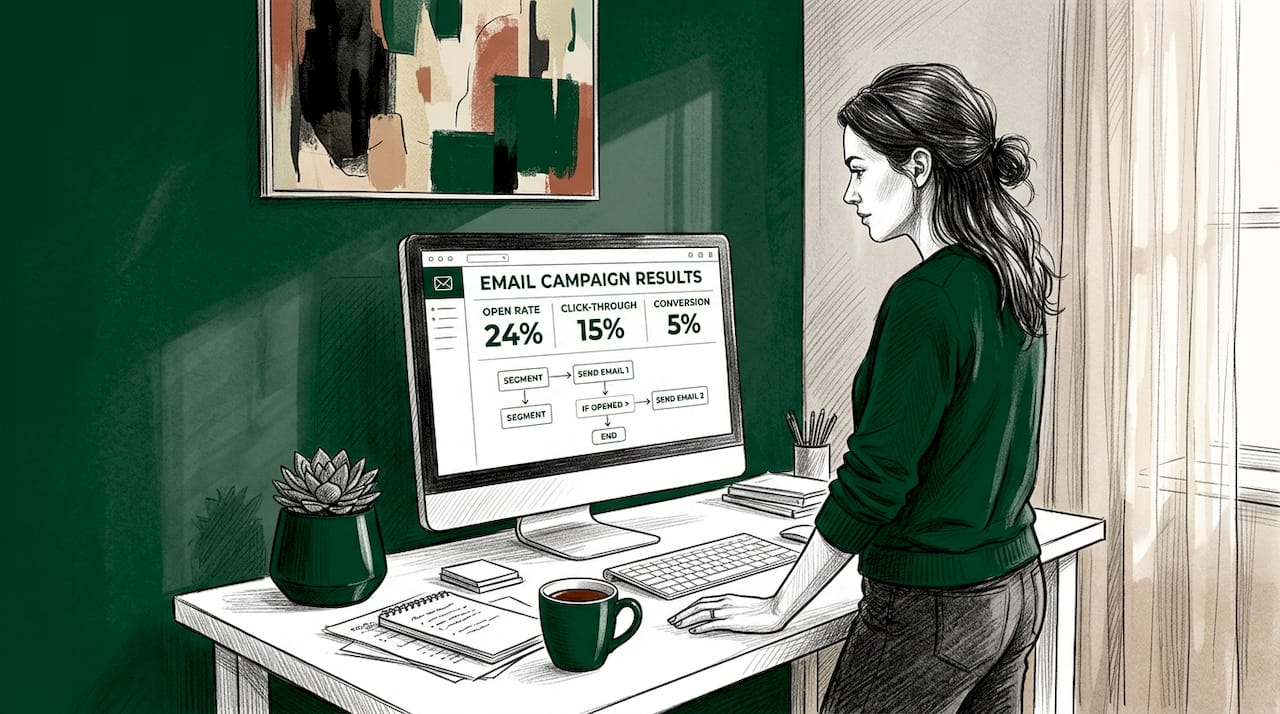
TL;DR:
- Automated email systems deliver behavior-triggered messages that improve retention and revenue for e-commerce brands. They enable precise timing, dynamic content, and segmentation, which manual campaigns cannot match, thereby reducing churn and increasing customer lifetime value. Proper technical setup, logical flow architecture, and operational discipline are essential to maximize deliverability, relevance, and ROI.
Most e-commerce brands send emails. Few send the right email at the right moment to the right person. That gap is where revenue leaks and retention collapses. An automated email system closes that gap by firing precise, behavior-triggered messages without anyone touching a keyboard. For DTC brands in health, beauty, and subscriptions, where repeat purchase rates directly determine whether a brand is profitable or just busy, this is not a nice-to-have. It is the core engine of your retention marketing. This guide covers how these systems work, how to build effective flows, and what most brands consistently get wrong.
Table of Contents
- What is an automated email system and how does it work?
- Why automated email systems are vital for e-commerce customer retention
- Building effective automated email flows for e-commerce retention
- Key technical and operational considerations for automated email systems
- Rethinking automated email systems: beyond copywriting to logic and deliverability
- Boost your retention with expert automated email system solutions
- Frequently asked questions
What is an automated email system and how does it work?
An automated email system sends targeted emails triggered by subscriber actions like cart abandonment, a purchase, or a defined wait period, without any manual intervention. Think of it as a set of rules your email program follows on your behalf, 24 hours a day. A customer adds a product to their cart and leaves? The system fires. A subscriber goes 45 days without purchasing? The system fires again.
The architecture has four core components:
- Triggers: The event that starts the sequence (Started Checkout, Placed Order, Anniversary Date, Custom Event via API)
- Filters: Rules that exclude customers who have already converted, preventing irrelevant or damaging sends
- Conditional logic: Branches that route customers differently based on behavior, purchase history, or segment membership
- Dynamic content: Email body elements that change based on the recipient’s data, like product recommendations pulled from their browsing history
Understanding the basics of automated email response mechanics helps you see where personalization happens and where errors tend to creep in. The difference from a manual campaign is not just speed. It is that automated sends happen at the exact moment a customer is most receptive, scale to every subscriber simultaneously, and update content dynamically rather than broadcasting one message to everyone.
The automation impact on marketing is substantial precisely because of this timing advantage. Manual campaigns are scheduled. Automated campaigns respond. That distinction changes everything about how customers experience your brand.
Why automated email systems are vital for e-commerce customer retention
Retention is not about sending more email. It is about sending relevant email at moments that matter. This is where automation creates a real competitive edge.
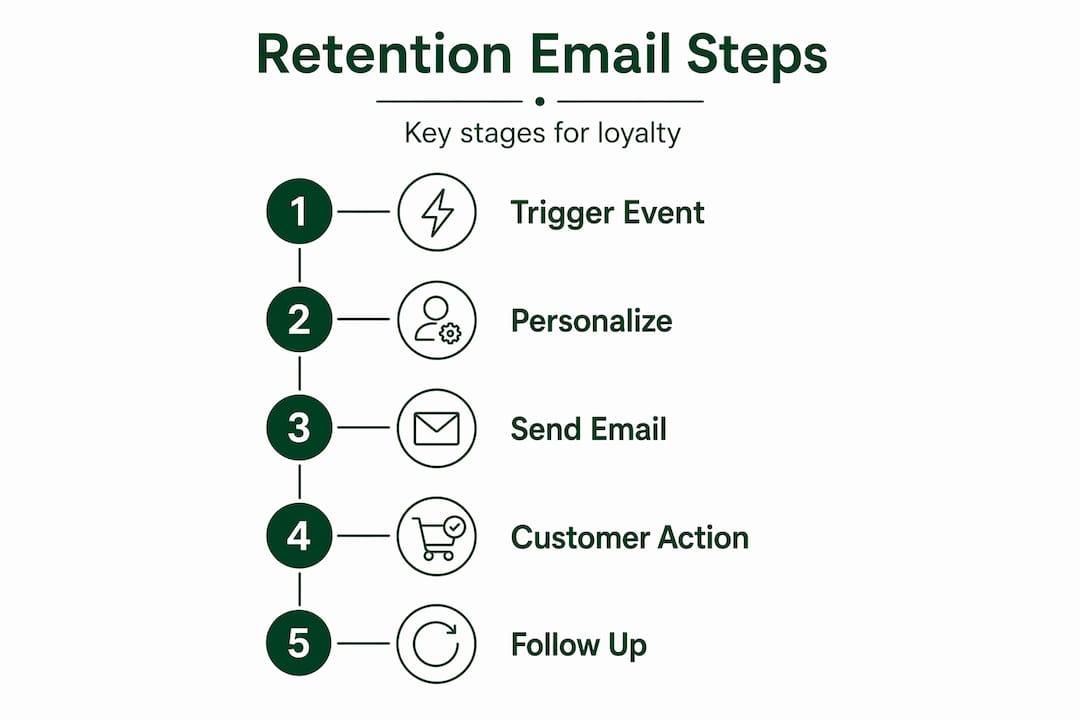
Automation scales to hundreds of campaigns simultaneously, driving timely and relevant engagement that manual campaigns simply cannot replicate at volume. A subscription skincare brand running 50 active flows, covering win-back, replenishment reminders, post-purchase education, and VIP rewards, cannot manage any of that manually without an army of staff. Automation makes it operationally possible.
The financial case is just as clear:
- Repeat buyers spend more per order than first-time customers, often 15 to 25 percent more
- Triggered emails generate 3x the revenue per email compared to standard broadcast campaigns
- Churn reduction compounds: saving 5 percent of your customer base from leaving can lift profits by up to 95 percent
“Retained customers via automation increase lifetime value and reduce churn, making automation the backbone of effective retention strategies.” source
The retention email benefits go beyond open rates. When a customer receives a replenishment reminder for their vitamin supplement exactly when they are about to run out, that email feels like good service, not marketing. That perception builds brand loyalty in ways that weekly newsletters never will. Understanding customer retention strategies at this level is what separates brands with strong lifetime value from those stuck in perpetual acquisition mode.
Building effective automated email flows for e-commerce retention
The abandoned cart sequence is the best place to start, because the revenue impact is immediate and measurable. Here is how to build one that actually works.
-
Define your triggers. Set “Started Checkout” or “Added to Cart” as the entry event. Add a delay of one to four hours before the first email fires. The best abandoned cart timing is a three-email sequence: first within one to four hours, second at 24 hours, and third between 48 and 72 hours to maximize recovery rates.
-
Build segmentation filters. Exclude anyone who completed a purchase after entering the flow. Split first-time visitors from returning buyers. These two groups need different messaging and different incentives.
-
Design three distinct emails. Email one is a soft reminder with a clear product image and a single CTA. Email two adds social proof, reviews, or a “why buy from us” section for reassurance. Email three introduces urgency or a limited-time discount, but only for segments where the cart value justifies it.
-
Add SMS between emails one and two. For opted-in subscribers, a short text message 12 hours after the first email meaningfully lifts recovery. High-performing flows add segmentation by buyer type and cart value, plus SMS coordination to boost recovery above email alone.
-
Test and optimize continuously. Run subject line A/B tests on email one. Monitor recovery rate, revenue per recipient, and unsubscribe rate as your core metrics. Adjust delays and discount thresholds based on real data, not assumptions.
Pro Tip: Never include a discount in your first abandoned cart email. You are training customers to abandon carts intentionally to receive offers. Segment discount emails to high-cart-value abandoners only, and test whether the discount even lifts conversion versus the control group before making it permanent.
| Flow element | First-time visitor | Returning buyer |
|---|---|---|
| Email 1 tone | Brand introduction + reminder | Personal, familiar reminder |
| Discount offered | No | Possibly, at email 3 |
| Social proof emphasis | High | Low to medium |
| SMS included | Yes, if opted in | Yes, if opted in |
| Cart value threshold for incentive | $75+ | $100+ |
For more on building these sequences well, the email automation tips resource covers flow architecture for DTC brands in detail, and the automated response email guide covers copy structure.
Key technical and operational considerations for automated email systems
A well-written email that lands in spam is worthless. The technical foundation of your automated email system determines whether your messages reach the inbox at all.

Authentication is non-negotiable. Deliverability requires monitoring domain and IP reputation via Google Postmaster Tools and keeping spam complaint rates below 0.10%. Set up SPF, DKIM, and DMARC records before sending a single automated email. Gmail and Yahoo now enforce these as baseline requirements.
Webhook architecture matters more than most brands realize. If you are connecting your e-commerce platform to your email campaign software via webhooks, you need two things: signature verification (to confirm the event actually came from your platform) and idempotency (to prevent the same event from triggering duplicate sends). Webhook-driven systems need idempotency and signature verification to prevent duplicate or missed emails, which is a technical failure that damages customer trust fast.
Flow logic protects your margin. Flow logic complexity like filters to exclude converted customers or conditional splits by cart value significantly impacts retention efficiency and cost. Sending a 15 percent discount email to someone who already bought is not just wasteful. It trains customers that waiting gets them a deal.
Key operational practices to follow:
- Monitor your sender reputation in Google Postmaster Tools weekly, not quarterly
- Set up suppression lists that update in real time as customers purchase
- Segment high-cart-value customers to manage discount exposure carefully
- Review flow performance monthly and kill sequences with negative ROI
Pro Tip: When launching a new sending domain, warm it up gradually over six to eight weeks. Start with your most engaged subscribers, increase volume in small increments, and watch complaint rates closely before scaling to your full list.
Pairing email marketing best practices with the operational discipline to monitor deliverability is what separates brands that see compound returns from those that see their flows plateau. The optimize retention campaigns resource goes deeper into the performance metrics worth tracking.
Rethinking automated email systems: beyond copywriting to logic and deliverability
Here is the uncomfortable truth most email marketing content avoids: the quality of your email copy is probably not the biggest variable in your retention results. The biggest variable is whether your system is logically sound.
Most brands obsess over subject lines and design while neglecting the flow filters that prevent converted customers from receiving discount emails they should never see. Most brands underestimate how critical flow filters and conditional logic are to protect deliverability and margin by reducing wasted sends. Every unnecessary send has a cost: deliverability risk, discount exposure, and inbox fatigue that chips away at your sender reputation over time.
Deliverability is equally undervalued. Brands treat it as a setup task rather than an ongoing discipline. But domain reputation recovery can be slow, demanding a disciplined monitor-diagnose-validate pattern before ramping volume. A brand that ignores complaint rates for three months and then tries to fix its reputation is in for a painful six-to-twelve week recovery period, during which every campaign underperforms.
The real discipline of a strong automated client communication program is this: build the logic first, then write the copy. Know exactly who should receive every email, under what conditions, and what outcome you are measuring. The email automation tips for DTC brands reinforce this principle repeatedly because it runs counter to how most marketing teams are wired to think. They think creatively first and operationally second. The best email programs flip that order.
Brands that scale past seven figures in retention revenue from email tend to share one trait: operational rigor. They are not sending the prettiest emails. They are sending the most precisely targeted emails, to the most carefully defined segments, with the cleanest sender infrastructure. That combination is what compounds over time.
Boost your retention with expert automated email system solutions
Building an automated email system that genuinely drives retention takes more than a platform subscription. It takes the right flow architecture, segmentation strategy, and ongoing performance discipline that most in-house teams simply do not have bandwidth for. The Email Marketers’ Retention Lab is built specifically for DTC, health, beauty, and subscription brands that want to turn email into a compounding revenue channel, not just a communication tool. Our Retention Toolkit gives you ready-made flows, segmentation templates, and optimization checklists that remove the guesswork from the setup process. See how this approach has worked in practice through our brand case study, and start building email automation that actually moves your retention metrics.
Frequently asked questions
What is the main difference between automated and manual email campaigns?
Automated emails send immediately when a customer action happens, while manual campaigns require human initiation and lack the dynamic timing that makes triggered messages so effective.
How quickly should the first abandoned cart email be sent?
The first abandoned cart email should go out within one to four hours of abandonment. Sending within that window recovers roughly twice as many carts compared to waiting 24 hours.
What are common deliverability pitfalls for automated email systems?
The most common pitfalls are missing SPF, DKIM, or DMARC authentication and ignoring spam complaint rates. Spam rates above 0.10% risk triggering Gmail enforcement, which can take your inbox placement from high to near zero overnight.
How can I prevent duplicate email sends when using webhook-triggered automation?
Build idempotency and signature verification into your webhook processing. Webhook-driven systems need both safeguards to prevent duplicate sends when events are retried or received more than once.


