.png)


Email Campaigns vs Flows: What E-Commerce Brands Need

TL;DR:
- Email campaigns are manually scheduled broadcasts aimed at specific segments, while email flows are automated sequences triggered by subscriber behavior. Flows generate a higher return on investment by delivering timely, relevant messages that support key customer lifecycle moments. Combining both strategies consistently improves engagement and revenue for e-commerce brands.
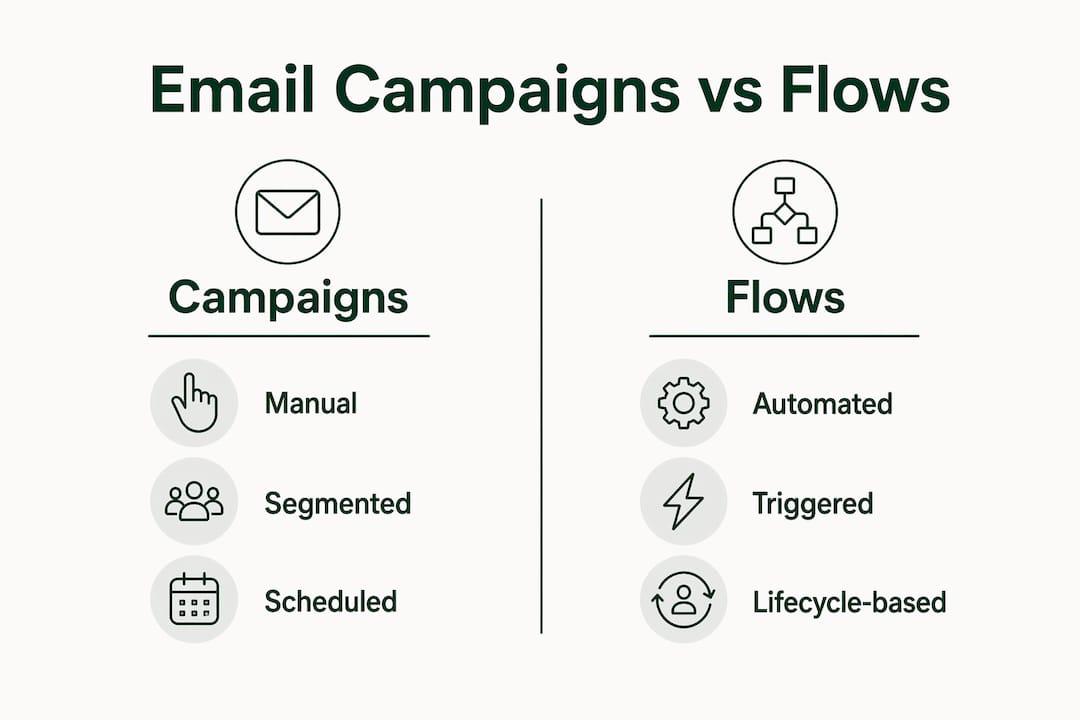
Email campaigns are manually scheduled broadcasts sent to a defined audience segment, while email flows are automated triggered sequences that run continuously based on individual subscriber behavior or lifecycle stage. Understanding the campaigns vs flows email distinction is the foundation of any retention strategy worth building. Brands that treat both as interchangeable leave revenue on the table. Campaigns build broad momentum around launches and promotions. Flows capture individual conversions throughout the year, quietly working in the background every hour of every day.
What is the difference between email campaigns and flows?
Campaigns are manual, goal-driven sends planned for a specific segment and scheduled by the marketer. A Black Friday promotion, a new product announcement, or a monthly newsletter are all campaigns. You write them, set the send time, and they go out once.
Email automation flows work differently. A flow is a sequence of emails that fires automatically when a subscriber meets a defined condition. Someone joins your list and the welcome series starts. Someone abandons a cart and the abandonment sequence triggers. No manual action required after the initial setup.
The four core automated flows every e-commerce brand needs are the welcome series, cart abandonment, post-purchase, and re-engagement sequences. Each one addresses a specific moment in the customer lifecycle. Together, they cover the gaps that campaigns cannot fill because campaigns do not know when an individual subscriber is ready to buy.
The structural difference matters for setup too. Campaigns need a template, a segment, a subject line, and a send date. Flows need trigger logic, conditional branching, time delays, and eligibility rules. The upfront investment in flows is higher, but the ongoing return is compounding.
Pro Tip: Build your flows before you scale your campaigns. Flows protect the revenue you generate from campaign traffic by catching subscribers who do not convert on the first touch.
How do targeting and timing differ between campaigns and flows?
Campaigns target pre-selected segments chosen manually before each send. You might target customers who purchased in the last 90 days, subscribers in a specific geographic region, or a list of VIP buyers. The marketer decides the audience and the send time.
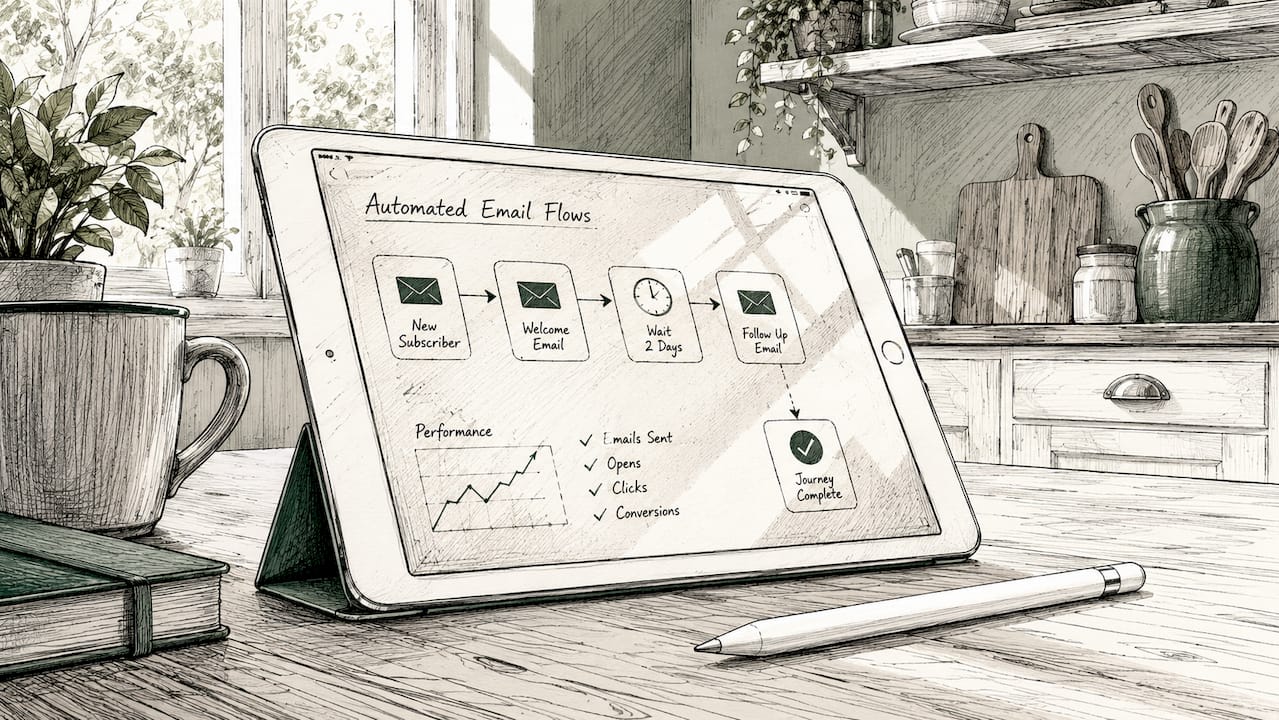
Flows target individual subscribers automatically. The trigger defines who enters the flow and when. A subscriber who views a product three times but does not buy can enter a browse abandonment flow. A customer who has not opened an email in 120 days can enter a re-engagement sequence. The system handles the timing without any manual input.
This difference in timing is where flows gain a significant advantage in relevance. A cart abandonment email sent one hour after the subscriber leaves the site is far more relevant than a promotional campaign sent on a Tuesday because the marketing calendar said so. Relevance at the right moment drives opens, clicks, and purchases.
Common flow triggers include:
- Subscription or sign-up — starts the welcome series
- Cart abandonment — fires after a set time without purchase
- Purchase completion — starts the post-purchase sequence
- Inactivity threshold — triggers re-engagement after a defined period
- Browse behavior — activates when a subscriber views specific products
Campaigns, by contrast, work best when the timing is marketer-controlled. A seasonal sale, a product launch, or a content newsletter all benefit from a planned send date. The marketer controls the narrative and the moment.
Segmentation quality determines campaign performance. Sending the same message to your entire list wastes budget and trains subscribers to ignore you. Behavioral and lifecycle segmentation, the same logic that powers flows, now applies to campaigns too. A promotion sent only to customers who bought a related product last year will outperform a broadcast to your full list every time.
How do campaigns and flows perform differently in revenue and engagement?
The performance gap between campaigns and flows is significant. Automated flows generate approximately 41% of total email revenue while representing only around 5.3% of total sends. That ratio means flows punch far above their weight in revenue contribution relative to volume.
Segmented campaigns generate 30% higher open rates and 50% higher click-through rates than unsegmented campaigns. Segmentation is not optional if you want campaigns to compete with the relevance that flows deliver by default.
| Metric | Campaigns | Automated flows |
|---|---|---|
| Send volume share | ~94.7% of sends | ~5.3% of sends |
| Revenue share | ~59% of revenue | ~41% of revenue |
| Open rate advantage | Higher with segmentation | Consistently high due to timing |
| Click-through rate | +50% with segmentation | Elevated by behavioral relevance |
| Marketer effort per send | High (manual per send) | Low (one-time setup, ongoing return) |
The data tells a clear story. Flows are disproportionately valuable per email sent. Campaigns still drive the majority of revenue in absolute terms, but only because they represent the majority of volume. On a per-recipient basis, flows win.
Combining both is the only approach that covers the full customer lifecycle. Campaigns build awareness, drive urgency, and generate spikes in revenue around key moments. Flows sustain engagement between those spikes and convert subscribers who were not ready during the campaign window. Customer retention improves when both work together because no subscriber falls through the cracks.
What are best practices for integrating campaigns and flows?
The most effective approach treats campaigns and flows as two halves of one strategy, not competing priorities. Aligning each campaign and flow to a specific measurable goal, such as revenue, activation, or reactivation, keeps your program focused and makes performance easy to evaluate.
Use campaigns for:
- Product launches and seasonal promotions — time-sensitive offers that require broad reach
- Content and education — newsletters, guides, and brand storytelling
- Announcements — new collections, policy changes, or events
- List-wide engagement — periodic sends to maintain brand presence
Use flows for:
- Lifecycle moments — welcome, post-purchase, and anniversary sequences
- Behavioral triggers — cart abandonment, browse abandonment, and wishlist reminders
- Retention — re-engagement flows for inactive subscribers
- Upsell and cross-sell — triggered by purchase history and product affinity
Avoid overlap between campaigns and flows. A subscriber in an active cart abandonment flow should not receive a promotional campaign on the same day. Most email platforms allow suppression rules that exclude subscribers currently in a flow from campaign sends. Set these up before you scale either channel.
Quarterly audits of your flows keep triggers accurate and sequences relevant. Products get discontinued. Offers expire. Customer behavior shifts. A flow built 18 months ago may now send subscribers to a sold-out product page or reference a promotion that ended. Audits catch these issues before they damage deliverability or customer trust.
Pro Tip: Map your flows against your campaign calendar. If a major campaign send overlaps with a high-volume flow period, adjust suppression rules or delay the campaign by 48 hours to protect inbox placement and avoid subscriber fatigue.
Segmentation in campaigns should evolve beyond basic demographics. Behavioral and lifecycle criteria now match the precision that flows deliver automatically. Segment by purchase frequency, product category, average order value, or engagement recency to close the relevance gap between campaigns and flows.
What challenges do marketers face with campaigns vs flows?
Campaigns and flows each carry distinct failure modes. Knowing them in advance prevents the most common and costly mistakes.
Campaign challenges:
- Segmentation limits. Sending to your full list without segmentation trains subscribers to ignore you. Open rates drop, spam complaints rise, and deliverability suffers.
- Timing mistakes. Sending a promotional campaign during a major flow sequence creates message collision and subscriber confusion.
- Campaign fatigue. Sending too frequently without a clear value exchange erodes trust and increases unsubscribes.
Flow challenges:
- Incorrect trigger settings. A welcome flow that fires for existing customers, or a cart abandonment flow with a delay that is too long, reduces the relevance that makes flows effective.
- Overlapping flows. A subscriber can enter multiple flows simultaneously if eligibility rules are not set correctly. Bad automation due to improper trigger settings or overlapping flows alienates customers and is one of the most common causes of long-term disengagement.
- Outdated sequences. Flows that reference old offers, discontinued products, or expired discounts damage brand credibility.
Monitor both channels with clear KPIs. For campaigns, track open rate, click-through rate, revenue per send, and unsubscribe rate. For flows, track entry rate, completion rate, conversion rate per step, and revenue per recipient. When a metric drops, investigate the specific email in the sequence rather than the flow as a whole.
Deliverability risk increases when campaign volume spikes without a corresponding increase in engagement. Warm up new sending infrastructure gradually, and suppress unengaged subscribers from high-volume campaign sends to protect your sender reputation.
Key Takeaways
Automated flows and segmented campaigns together cover the full customer lifecycle, and neither channel alone delivers the retention results that both achieve in combination.
| Point | Details |
|---|---|
| Campaigns are manual broadcasts | Schedule them for launches, promotions, and announcements targeting defined segments. |
| Flows automate individual moments | Trigger sequences by behavior or lifecycle stage to maximize relevance and timing. |
| Flows drive outsized revenue | Automated flows generate about 41% of email revenue from only 5.3% of sends. |
| Segmentation lifts campaign results | Segmented campaigns produce 30% higher open rates and 50% higher click-through rates. |
| Audits keep flows effective | Review flow triggers and content quarterly to prevent outdated sequences and overlap. |
The real reason most brands underuse flows
Most e-commerce brands I work with have campaigns dialed in. They have a content calendar, a promotional schedule, and a reliable send cadence. What they almost always lack is a flow infrastructure that actually reflects how their customers behave.
The common mistake is treating automation as a one-time project. You build a welcome series, set up a cart abandonment flow, and move on. Six months later, the welcome series still references a discount that expired, and the cart abandonment flow fires for customers who already purchased because the exit condition was never set correctly. The automation is running, but it is working against you.
What I have found actually works is treating flows like a living program, not a finished product. Every quarter, pull the performance data on each flow step. Look for the drop-off points. A step with a 60% open rate followed by a step with a 20% open rate tells you exactly where the sequence loses relevance. Fix that step before you build a new flow.
The other insight that most articles skip: campaigns and flows should inform each other. If a campaign promoting a specific product category generates a spike in purchases, that is a signal to build or refine a post-purchase flow for that category. If a re-engagement campaign reactivates a segment, those subscribers should enter a nurture flow immediately after, not sit dormant until the next campaign. The best email flows are the ones built in response to what your campaigns reveal about customer behavior.
Small and mid-sized e-commerce brands do not need 20 flows. They need four or five flows that are accurate, well-timed, and regularly reviewed. Start with the essentials, measure everything, and expand from there.
— Melanie
How Theemailmarketers builds campaigns and flows that drive retention
Theemailmarketers works with e-commerce brands to build email programs where campaigns and automation work as one system, not two separate efforts. The team audits existing flows, rebuilds trigger logic, and develops segmented campaign strategies tied to measurable revenue goals. Every engagement starts with a clear picture of what the current program is missing and where the highest-value opportunities are. Brands looking for proof can review the client results that show exactly how integrated campaign and flow strategies improve repeat purchase rates and customer lifetime value. For brands ready to build a full retention program, the Retention Lab offers a structured path to doing it right.
FAQ
What is the main difference between email campaigns and flows?
An email campaign is a manually scheduled broadcast sent to a defined segment at a specific time. An email flow is an automated sequence triggered by individual subscriber behavior or lifecycle stage, running continuously without manual input.
Which generates more revenue: campaigns or flows?
Automated flows generate approximately 41% of total email revenue while representing only about 5.3% of total sends, making them significantly more efficient on a per-recipient basis. Campaigns still drive the majority of total revenue because they represent the majority of send volume.
How often should I audit my email flows?
Quarterly audits are the standard recommendation for keeping flow triggers accurate and content relevant. Audits catch outdated offers, incorrect exit conditions, and overlapping sequences before they affect deliverability or customer experience.
Can campaigns and flows overlap and cause problems?
Yes. A subscriber receiving both a campaign and a flow email on the same day creates message collision and increases unsubscribe risk. Use suppression rules in your email platform to exclude subscribers currently active in a flow from simultaneous campaign sends.
What are the most important flows for an e-commerce brand?
The four core flows are the welcome series, cart abandonment, post-purchase, and re-engagement sequences. These four cover the highest-value moments in the customer lifecycle and deliver the strongest return relative to setup effort.


